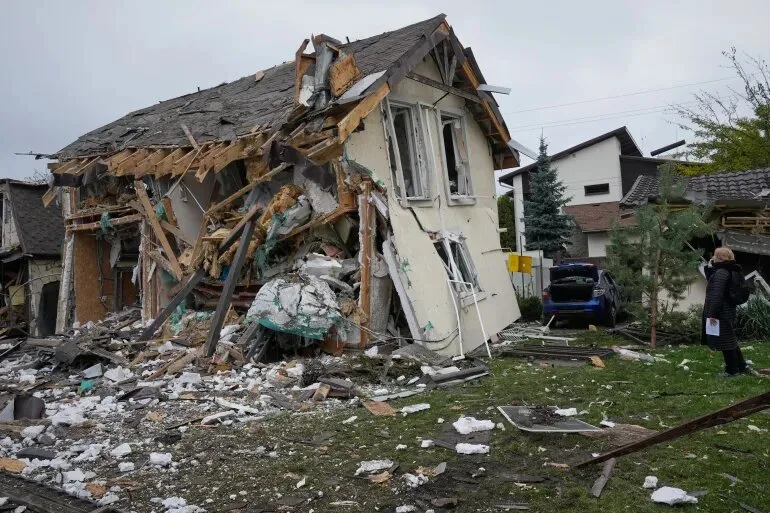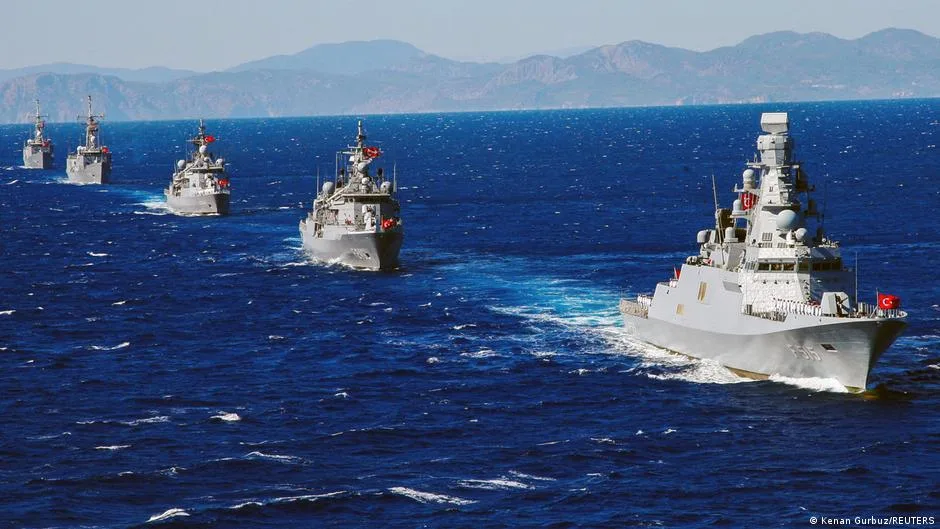
Tensions between Greece and Turkey have reached a peak once again; Greece criticizes the violation of its airspace and the establishment of Turkish marine parks, deeming these parks illegal. Additionally, the transfer of Turkish forces to coastal areas has added to Athens' concerns.
Mutual Threats and Increased Military Readiness
Recep Tayyip Erdoğan, the President of Turkey, has called for Greece to end the "militarization" of its islands. Hakan Fidan, Turkey's Foreign Minister, considers this situation a serious threat to his country's security. Meanwhile, Mary Bosi, a retired professor of international security, warns of the rising tensions and threatening tone in both countries, believing that the uncertain regional and international conditions could exacerbate the tensions.
Read more: Erdoğan: The Mecca Joint Defense Agreement is Not Against Iran or Israel
At the same time, Greece has focused on strengthening its military. The country signed a billion-dollar arms deal with Israel at the end of August and, under the "Achilles Shield" plan, will receive an extensive air defense system. John Psaropoulos, a Greek analyst, views these actions as defensive from Athens' perspective and believes that regional wars have created an environment where war has become normalized.
History of Tensions and Turkey's New Doctrine
The disputes between Greece and Turkey have a long history, particularly since Turkey's invasion of Cyprus in 1974, with Athens and Ankara frequently clashing over various issues in the Aegean Sea. One of the key issues between the two countries is territorial waters. Greece believes that under the United Nations Convention on the Law of the Sea, it can extend its territorial waters up to 12 nautical miles, while Turkey sees this action as a reason for war.
Additionally, Turkey's new doctrine called "Blue Homeland," which is set to be reviewed in the country's parliament, aims to expand Turkey's areas of influence in the Mediterranean. Critics describe this doctrine as a plan to extend "neo-Ottoman" influence.
Hussein Bagchi, a political science professor in Ankara, considers the likelihood of military conflict between Greece and Turkey to be low, referring to these disputes as a "family disagreement" that should be resolved within the framework of NATO and the European Union. However, with the deployment of about two thousand Turkish soldiers to the coastal area south of Izmir, he views this action as a sign of Turkey's readiness for war.
Experts also attribute part of the recent tensions to Greece's domestic politics. Elections are set to be held in Greece, and Kyriakos Mitsotakis, the country's Prime Minister, does not want to appear weak. Thus, the period known as "calm waters" in the relations between the two countries, which began after Erdoğan's visit to Athens in 2023, has come to an end.
Read more: Mohammad has become the most popular name in the occupied territories · The Zionist regime is seeking to change the security map of southern Syria