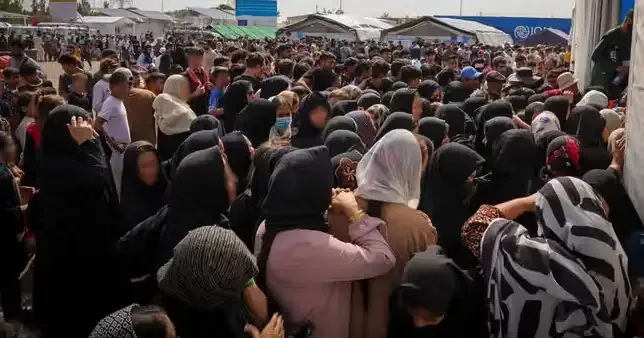
The economic crisis in Iran and recent developments in Afghanistan have resulted in a new wave of Afghan migrants returning home. In the current situation, many Afghans who have lived in Iran for years have decided to return due to insecurity and increased violence in their home country.
Increase in Violence in Afghanistan
The United Nations Secretary-General has recently reported that from May 1 to July 31, armed groups opposing the Taliban claimed responsibility for 88 attacks in 21 provinces of Afghanistan. This report indicates that attacks by Taliban opponents significantly increased in July, reaching 30 attacks. Various fronts, including the Afghanistan Freedom Front and the National Resistance Front, have carried out these attacks.
Read more: Military and Cyber Training by the People's Headquarters for the Public is Being Designed
These attacks mainly involve ambushes and assaults on Taliban checkpoints and military facilities of this group. For example, the Taliban's Ministry of Promotion of Virtue and Prevention of Vice in Herat and Kabul has been targeted in these attacks. Additionally, in another report, on June 5, a suicide bomber detonated explosives outside a boys' school in Kabul, highlighting the insecurity in this country.
Humanitarian and Social Consequences
According to UN reports, from May 1 to July 31, 2,947 security incidents were recorded in Afghanistan, representing an 11 percent increase compared to last year. This insecurity has led many Afghans, especially those living in Iran, to consider returning to their home country.
Conflicts between the Taliban and Pakistani forces have also impacted the security situation, resulting in at least 57 civilians being killed in clashes between the Taliban and Pakistan. This situation has indirectly affected Afghan migrants in Iran, leading many to conclude that returning to Afghanistan is better than continuing to live under unfavorable economic conditions in Iran.
The Pakistani embassy in Afghanistan has informed UNAMA that these attacks have "only" targeted terrorist positions, but the Taliban's Ministry of Foreign Affairs has rejected this claim and firmly denied that civilians were targeted.
Meanwhile, the economic situation in Iran has also added to the pressures. Given the economic crisis and rising prices, many Afghan migrants are contemplating returning to their homeland. In fact, this economic crisis and insecurity in Afghanistan have somewhat overlapped, forcing many Afghans to make difficult choices.
With this trend continuing, it is expected that the wave of Afghan migrants returning to their country will increase, which could have significant social and economic repercussions for both countries.
Read more: Iran's Advanced Missile Technologies Have Surprised the U.S. Army · Chinese Foreign Minister: Strong Support for Iran's Sovereignty and National Security