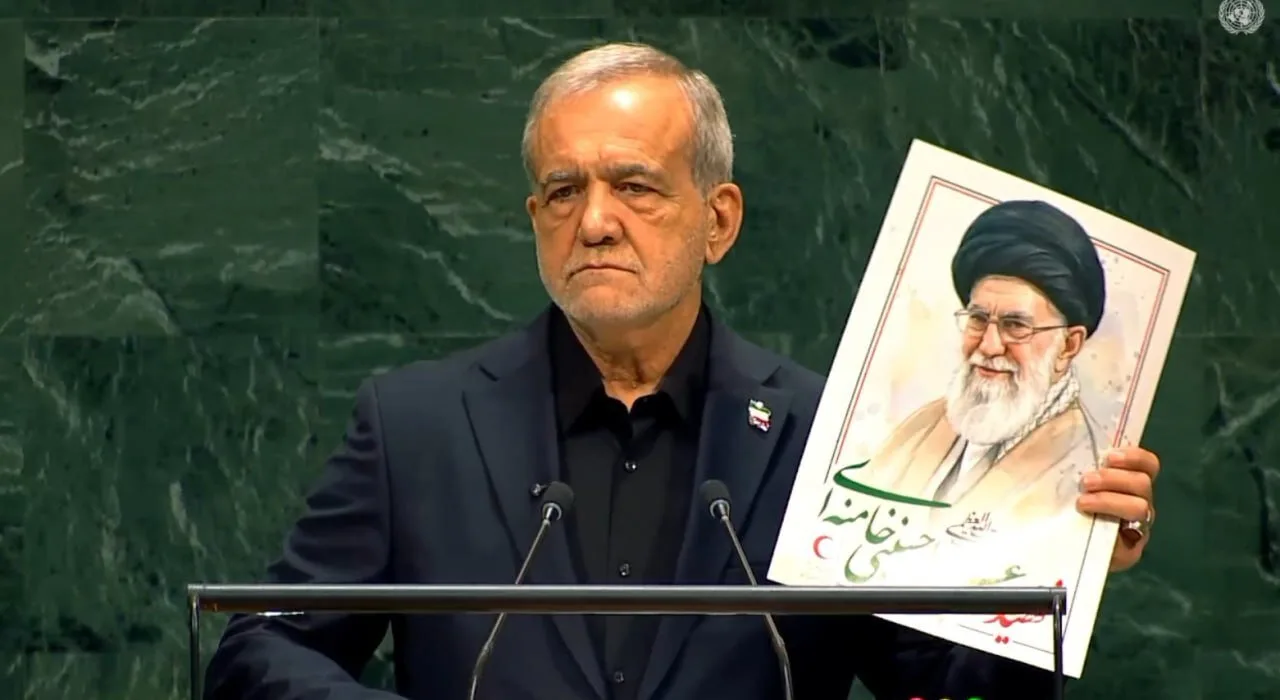
Dr. Masoud Pezeshkian, the President, delivered an epic and impactful speech at the United Nations General Assembly from September 23 to 25, 2026, which received widespread reactions in the media and social networks. This speech particularly highlighted his firm positions against the United States, war, deterrence, and nuclear issues, and was extensively covered in the media.
Media Content Analysis
The Monitoring and Metadata Center of the National Cyberspace Center has conducted an analytical report examining the various reflections of this speech. According to this report, thousands of content records from news agencies, newspapers, and domestic and foreign platforms were analyzed and coded during this time period. Key findings indicate that the media landscape surrounding Dr. Pezeshkian was particularly influenced by his speech, with two main narratives of "resistance and deterrence" and "negotiation and diplomacy" simultaneously appearing in the content.
Read more: Masoud Pezeshkian: Iran will adhere to any commitment
Reactions in Social Media
While news agencies and domestic platforms like Bale, Eitaa, Rubika, and Soroush focused on official positions, quotes, and various sections of the speech, on social networks, this speech became a topic for reaction, interpretation, and dispute. Users primarily evaluated the speech and its meaning, thus paying more attention to reactions and analyses in these platforms than to the text of the speech itself.
Among these, narratives related to Iran being a victim in the war, images of children from Minab and Lamerd, as well as the nuclear duality of Iran and Israel, received the most reflection in the content. This indicates the emotional and humanitarian significance of the topics raised in Dr. Pezeshkian's speech and how these issues have particularly resonated among younger social media users.
Statistics and Data Review
In terms of content production volume, Eitaa was the most productive platform examined, with 165,845 pieces of content and nearly 30,000 active channels. However, the highest view count was related to Rubika with over 257 million views, while Eitaa recorded about 80 million views. Bale, with 35,614 pieces of content and 4,756 active channels, had 66,991,000 views, and Soroush, with 17,689 pieces of content and 1,736 active channels, had 13,625,000 views in subsequent ranks.
This difference indicates that a higher volume of content production does not necessarily mean more views. In other words, the number of posts alone cannot indicate the influence of a narrative, and simultaneous examination of production volume, views, and engagement provides a more accurate picture of the media weight of the content.
Overall, these reviews indicate that the main platform for content production and views related to the esteemed presidency was associated with Iranian platforms, which well demonstrates the impact of Dr. Masoud Pezeshkian's speech on public opinion and the media landscape of the country.
Read more: Alireza Nadali talks about the challenges and achievements of urban management in Tehran · The President of Iran's remarks at the UN General Assembly and the isolation of the Zionist regime