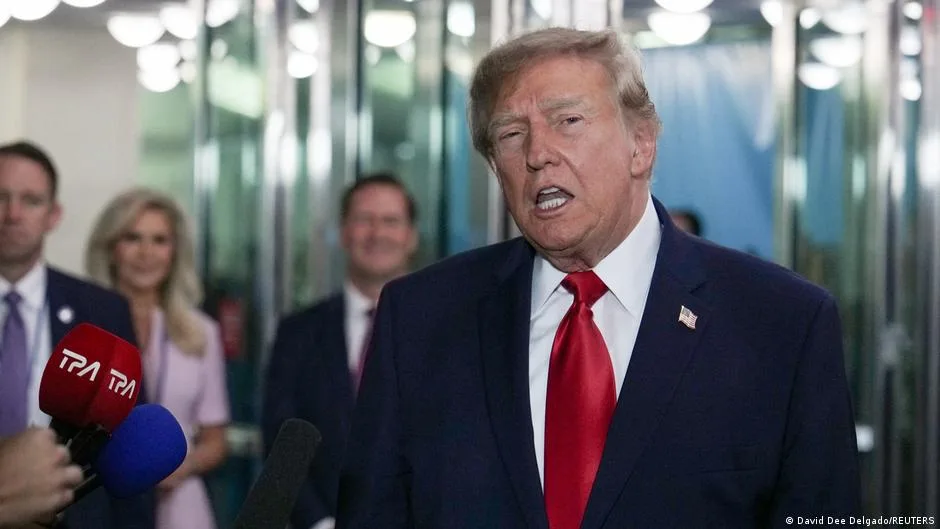
The U.S. government under the leadership of Donald Trump, the President of this country, has rejected Iran's proposal to reopen the Strait of Hormuz within seven days. This news comes as tensions in the Persian Gulf region have escalated sharply, with new reports of conflict and tension between Iran and neighboring countries emerging daily.
Iran's Proposal and U.S. Reaction
Iran is attempting to end the existing tensions in the region by proposing the reopening of the Strait of Hormuz, which is one of the main routes for global trade and oil transportation. Abbas Araghchi, Iran's Foreign Minister, stated at the United Nations that the seven-day deadline for reopening the Strait of Hormuz would begin after the U.S. agrees to Iran's plan.
Read more: Jafar Ghaempanah and Ali Akbar Salehi at the National Day Celebration of Saudi Arabia
According to U.S. officials, Donald Trump rejected the proposal due to doubts about the implementation of the conditions suggested by Iran. Meanwhile, Trump has shared a map of the Strait of Hormuz on the social media platform Truth Social, referring to it as "Trump's Strait."
Consequences of Trump's Decision on Regional Security
This decision could have serious consequences for international relations and security in the Persian Gulf region. Given that the Strait of Hormuz is one of the most important oil transportation routes in the world, any tension in this area could impact oil prices in global markets. Since the closure of the Strait of Hormuz, according to Iranian accounts, the U.S. has repeatedly stated that tankers have passed through this waterway, indicating an inability to fully control the area.
Analysts believe that Trump's rejection of Iran's proposal could lead to heightened tensions and conflicts in the Persian Gulf, especially since Araghchi also mentioned seven conditions from Iran for ending the war and reopening the Strait of Hormuz, which include halting hostilities and releasing Iran's frozen assets.
As the midterm elections in Congress approach in November, Trump is expected to consider resuming attacks on Iran. This issue could exacerbate tensions and increase the risk of military conflicts.
In this complex situation, neighboring countries, particularly Saudi Arabia and Pakistan, are also strengthening their military cooperation to counter potential threats. This cooperation has taken the form of the "Makkah Defense Pact," aimed at enhancing collective deterrence against armed attacks.
Read more: Mohammad has become the most popular name in the occupied territories · Iran's Deputy Foreign Minister: The meeting on defending international rights must lead to practical action