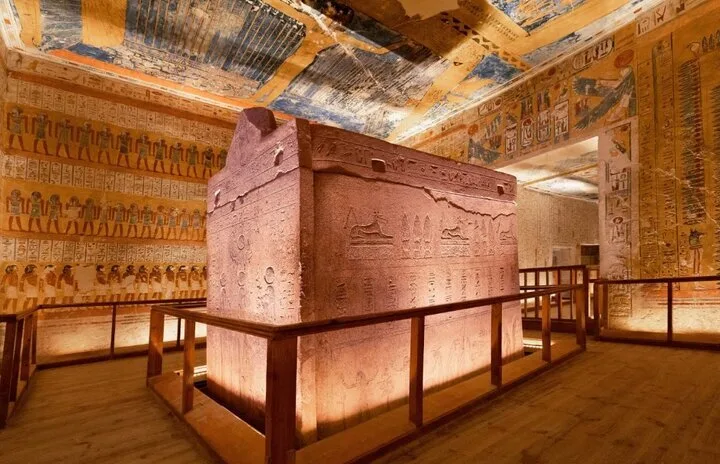
The examination of the famous "KV62" tomb in the "Valley of the Kings" in Egypt has showcased underground anomalies that may indicate the existence of a hidden collection of rooms and passageways. These findings have been obtained specifically through the use of modern technologies including ground-penetrating radar and microgravity measurements.
Amazing Discoveries by Archaeologists
This investigation, which included over 1,200 measurements in an area of about 35 square meters around the tomb, shows evidence of structures that likely existed before the tomb of Tutankhamun. "Mamdouh Eldamaty," an archaeologist from Ain Shams University and former Minister of Antiquities of Egypt, has pointed out that these results may indicate the presence of a hidden collection of rooms and corridors.
Read more: A concert paying tribute to figures of cinema and music in Iran was held
Speculations About Hidden Chambers
One of the most astonishing findings by researchers is evidence of a two-meter-wide corridor that they believe may extend from Tutankhamun's burial chamber. "George Ballard," a structural engineer and geophysics expert, has noted that this finding may have been overlooked in previous investigations because they were searching for a large, empty room.
This investigation has revived discussions about the possibility of hidden chambers in the tomb. In 2015, "Nicholas Reeves," a British Egyptologist, proposed a theory that the tomb of Tutankhamun might contain several additional rooms, including the burial chamber of "Nefertiti," one of the most famous queens of ancient Egypt.
Archaeologists believe that even if hidden rooms exist, it cannot be definitively said that they are the burial site of Nefertiti. These spaces may simply be storage or part of an older burial complex. In any case, a physical examination of the anomalies could eventually help explain this decades-old mystery.
However, any excavation and exploration in this matter will require approval from the Supreme Council of Antiquities of Egypt. Researchers hope that if the necessary permits are issued, the exploratory project will begin in early November.
Read more: Commemoration of National Day of Persian Poetry and Literature at the Iranian Embassy in Berlin · Acquisition of 90% of Kammerzrin properties; a new beginning in archaeological explorations