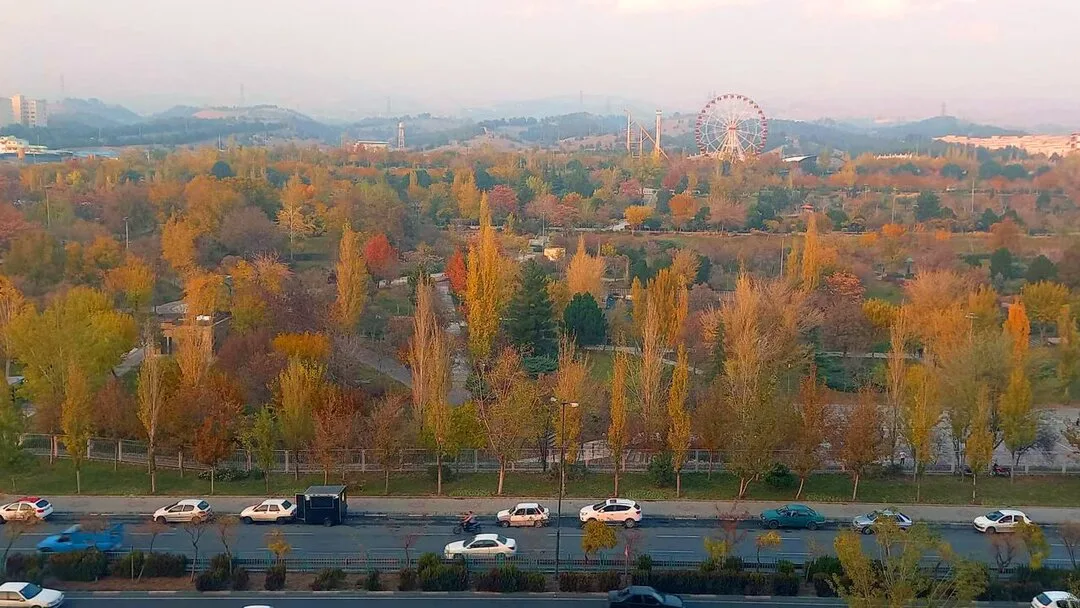
Autumn has arrived in Iran, but it seems that there is still no sign of autumn weather for many parts of the country, including the center and south. While the northern strip of the country is significantly affected by atmospheric instability, the southern regions remain embraced by warmth and stable weather.
Weather Conditions in the Northwest of the Country
In the northwest, especially in the heights of East and West Azerbaijan and Ardabil, the weather conditions are such that the likelihood of convective cloud formation and local instability is higher. Convection refers to the ascent of warm and humid air from the ground and its cooling at higher altitudes, which can lead to the formation of vertical clouds and short-term showers, thunderstorms, and sudden gusts.
Read more: The President speaks about the realities of Iran at the UN General Assembly
Instability Centers on the Shores of the Caspian Sea
On the shores of the Caspian Sea and the Alborz heights, the most important centers of atmospheric instability in the country are visible. The influx of moisture from the Caspian Sea and the collision of moist currents with the Alborz slopes create conditions for orographic ascent. This situation increases the likelihood of cloud formation and precipitation, and in provinces such as Gilan, Mazandaran, Golestan, and the Alborz heights, local and sporadic showers will be more common.
In the northeast of the country, the heights of North Khorasan and Razavi Khorasan may also experience local instabilities. These instabilities are mainly point-based and cannot lead to the formation of a widespread precipitation system across the east of the country.
Possibility of Limited Showers in the Southeast
In the southeast of the country, moisture from the Oman Sea can help in the growth of convective clouds during the warm hours of the day. However, precipitation in these areas will also be limited and local. Parts of southern Sistan and Baluchestan, eastern Hormozgan, and southern Kerman are in a region prone to instability, but the extent of precipitation remains very limited.
In contrast, the center, south, and southwest of the country are facing stability and subsidence of the atmosphere, and in these areas, especially in provinces like Yazd, Isfahan, Fars, Bushehr, and Khuzestan, warm and mostly dry weather continues. In these areas, there is no sign of the establishment of a widespread precipitation system, and it is likely that stable atmospheric conditions will continue.
Weather Forecast for Tehran
In Tehran, the weather is predominantly stable, and current data indicate clear weather and high temperatures. In these days, no significant precipitation is forecasted for the capital, and the possibility of dust occurrence in dry and desert areas also increases with the rising wind speed.
Given this weather situation, it seems that this autumn in Iran will be a season with diverse instabilities in the north and heat in the south. These weather changes can have various impacts on the daily lives of people and agricultural activities.
Read more: Iraqi: The return of security to the Strait of Hormuz requires stopping U.S. actions · Rain in the north; a new system will enter Iran from Thursday