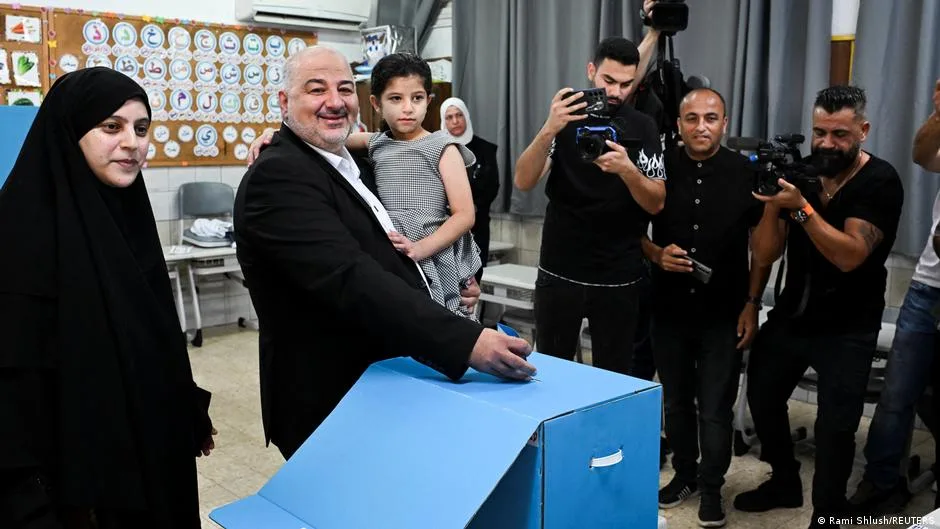
Arab party coalitions achieved a historic milestone in the Israeli parliamentary elections, securing 19 seats out of a total of 120 in the parliament. This success has nearly doubled their seat count compared to the 2022 parliamentary elections. As the ruling coalition led by the Likud party and Prime Minister Benjamin Netanyahu has failed to secure an absolute majority of 61 seats, Arab parties have become a determining factor in the government formation process.
Arab Parties and Their Positions
Arab parties consist of two main groups: first, the Ra'am party led by Mansour Abbas, and second, the Hadash, Ta'al, and Balad parties, which have united under a common electoral list. Yusuf Jabareen heads this joint list. The Ra'am party, which has an Islamic conservative orientation, joined a government coalition in Israel in 2021 as the first independent Arab party. The participation of this party in Naftali Bennett's government, the then Prime Minister of Israel, was seen as a historic step towards the political integration of the Arab minority in the country.
Read more: Friedrich Merz: Iran is Acting Stronger in Negotiations with the U.S. than We Imagine
The Ra'am party focuses on issues such as combating crime in the Arab community and achieving legal and social equality for Arabs in Israel. On the other hand, the three parties forming the joint list, despite following different political streams and ideologies, share common goals regarding Israel and the Palestinians. These parties advocate for legal and social equality for Arab citizens of Israel, an end to the occupation of Palestinian territories, and the establishment of an independent Palestinian state.
Electoral Participation and Its Consequences
According to information from electoral bodies, the voter turnout in the first parliamentary elections in Israel after the Hamas attack in 2023 was nearly 78%. This is the highest turnout since 1999, with about 7.3 million eligible voters, of which two million were Arab citizens of Israel. In some Arab-populated areas and cities in Israel, the voter turnout this year reached nearly 100%.
Some Israeli political commentators attribute the increase in voter participation to the stringent measures taken by Itamar Ben-Gvir, the Minister of National Security and head of the Israeli police. Yusuf Jabareen, head of the joint list of Arab parties, argued that the Netanyahu government and the far-right Minister responsible for police affairs have "turned life into hell for every Arab citizen." The Likud party, led by Netanyahu, has accused Arab parties of electoral fraud and claimed that countries like Qatar and Turkey have funded organizations aimed at increasing electoral participation among Arab citizens of Israel.
Currently, the initiative is in the hands of Isaac Herzog, the President of Israel, who must appoint one of the candidates to form a government. This candidate does not necessarily have to be the leader of the party that won the most seats but should be someone with the best chance of garnering support from at least 61 parliament members. At this stage, Arab parties can play a key role.
Both the joint list of Arab parties and the Ra'am party have expressed their readiness to cooperate with the opposition bloc led by Gadi Eisenkot. This cooperation could lead to the formation of a government that serves all citizens of Israel. Ultimately, if none of the candidates can form a government, new parliamentary elections will be held.
Read more: Ukraine's Attack on the Novokuybyshevsk Oil Refinery in Russia · Mohsen Rezaei and the New Scenario of JD Vance Ahead of the 2028 Elections