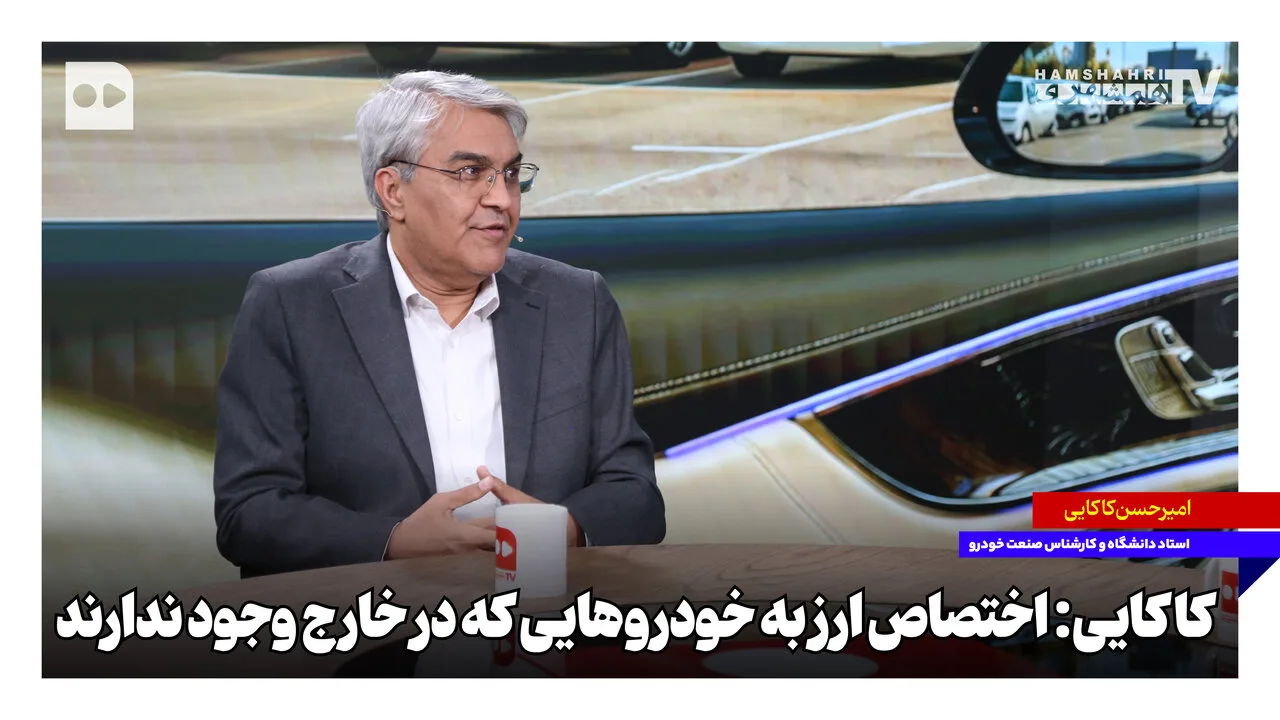
The allocation of currency to cars that do not exist abroad has become one of the hot economic topics. This issue, especially in recent days, has attracted the attention of many experts and analysts. Abolfazl Mortazavi, an economic expert, and Amirhossein Kakayi, a university professor and automotive industry expert, have engaged in a deep discussion to explore the various dimensions of this phenomenon.
Import of Assembled Cars and Billion-Dollar Profits
The import of assembled cars, which are recognized under foreign brand names, brings both economic opportunities and challenges. With the allocation of currency to these cars, some individuals and companies have exploited this opportunity and earned significant profits. This situation has raised many questions about transparency and fairness in the allocation of financial resources.
Read more: Discovery of one million liters of smuggled fuel and arrest of 133 suspects in Khorasan Razavi
Economic and Social Consequences
Analysts believe that this method of currency allocation could have serious consequences for the country's economy. On one hand, this action may lead to an increase in the prices of domestic cars, and on the other hand, it could reduce public trust in economic policies. In fact, when cars that are imported as assembled are purchased with state currency, this issue can fuel public dissatisfaction.
According to Abolfazl Mortazavi, this approach could exacerbate the unequal competition between domestic and foreign producers. In a situation where domestic producers face many limitations, allocating currency to the import of foreign cars could eliminate more opportunities for them.
Challenges in the Automotive Industry
Amirhossein Kakayi also pointed out the challenges in the automotive industry and said: "The automotive industry in Iran is facing many structural problems, and the allocation of currency to foreign cars is just one aspect of these problems. To improve the state of the automotive industry, we need fundamental reforms that include investment in technology and enhancement of production quality."
Ultimately, it seems that the allocation of currency to cars that do not exist abroad is not only an economic issue but also a social and cultural matter. Policymakers need to address this issue more carefully and adopt measures that support domestic production while also considering public interests.
Read more: Dollar price increases to 272,000 tomans and euro decreases to 303,000 tomans · Ban on registration of 24 phone models; users' fate is at risk