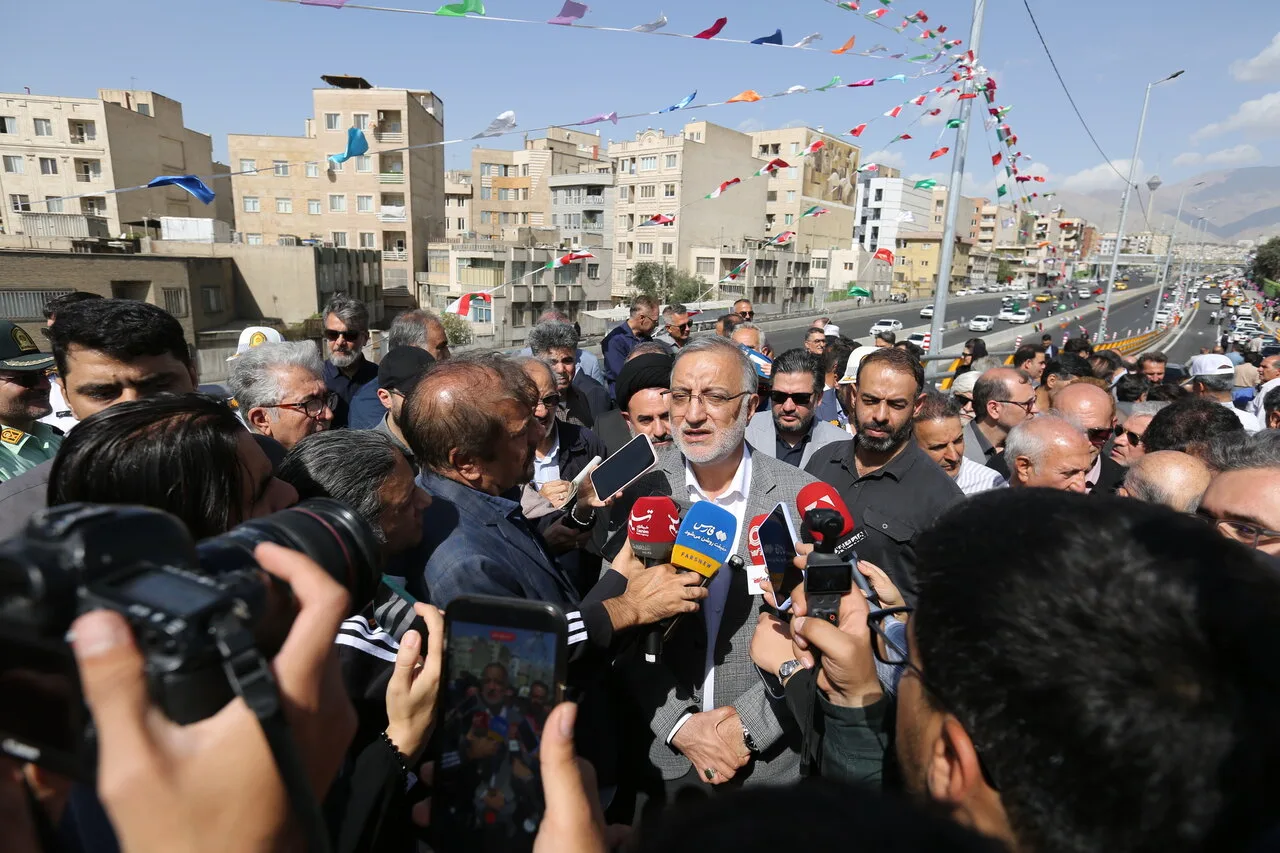
Alireza Zakani, the mayor of Tehran, at the inauguration ceremony of the Satar Khaneh Bridge to Chamran Highway, stressed the need to utilize the material and spiritual capacities of the people in solving urban problems. He stated that war should not halt urban projects and that collaboration with the public can pave the way for transformation in various urban areas, including housing, transportation, waste management, and business.
The Necessity of Participatory Management in Tehran
Zakani described the goal of the participatory management development approach as creating an environment to utilize all material and spiritual capacities of the people for the transformation of the city. He added that urban management should be directed in such a way that, relying on this management, the city's facilities are developed in collaboration with the people for the improvement of their lives. In this regard, citizens should be the main focus of transformations, constructions, and urban changes.
Read more: Sajjadpour: Zarif is successful in diplomacy due to national self-confidence
He pointed out that 51% of Tehran's citizens are renters, emphasizing the need for special attention to housing issues. He said, "The people of Tehran suffer from homelessness and inadequate housing issues, and within the framework of participatory management, the municipality must enter the field with all its capacities and share its resources with the people."
Public Participation in Solving Urban Problems
Zakani also noted that public participation is not limited to housing issues, as topics such as waste management, transportation, services, and business also require citizen collaboration. He referred to the "I Am the Mayor" initiative, which in its final stage has seen participation from over 3 million people who have submitted their ideas. Such initiatives can help establish participatory management more firmly in Tehran.
Zakani also mentioned the "Zero Inflation" plan, aimed at creating stability in the provision of essential goods for the people. He stated that this plan should be pursued over a six-month period to ensure that people have access to goods at reasonable prices. Alongside this, the "Bright Eye" initiative for mothers who have given birth has also been implemented since last week.
He emphasized the importance of strengthening public trust and creating stability in the provision of essential goods, saying, "These programs should be designed in such a way that people feel secure against economic pressures." Zakani also responded to criticisms regarding the "Zero Inflation" plan, noting that this plan is directly related to the municipality's responsibilities and can progress alongside other urban management missions.
In conclusion, Zakani expressed hope that with the continued implementation of programs and public cooperation, it would be possible to improve urban living conditions and solve existing problems, noting that over 50% of Tehran's residents shop at fruit and vegetable markets.
Read more: Abdolmahtab Mohammadi: The municipality will take action to support people's livelihoods · Abdolmahtab Mohammadi explained the "Zero Inflation" plan of Tehran Municipality