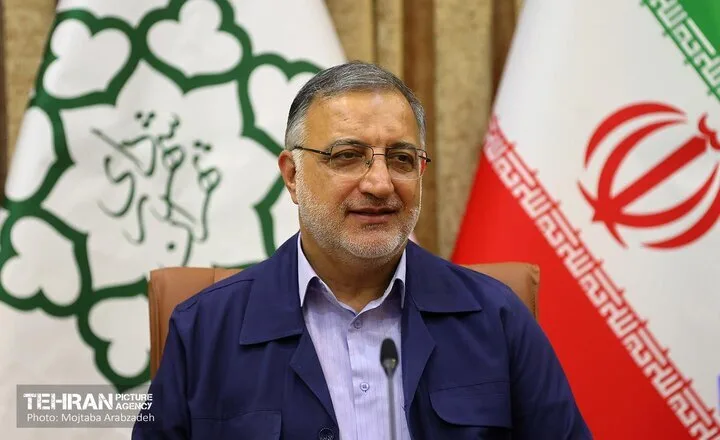
Alireza Zakani, the Mayor of Tehran, in a brainstorming session with municipal managers held on September 17, 2026, emphasized the need to create hope and build a strong Iran as a prelude to achieving religious and national goals.
Opportunity of Life and Divine Responsibility
Zakani pointed out that humans are born into this world to face divine tests, stating: "We have an opportunity to prepare provisions for the afterlife." He referred to the divine mission of the Iranian nation and stated that this mission includes pursuing the path of truth and realizing the goals of Islam.
Civilizational Models and Social Hope
The Mayor of Tehran stated that the geography of Iran should become a model for the world, adding: "We are eager to be part of the divine project." He emphasized that to prepare for the emergence, we need to create models and have chosen Iran as a strong model. Zakani said: "If Tehran is built, other parts of the country will significantly emulate it," and this will increase the speed of replicating this model.
Zakani also referred to the necessity of creating hope in society as a foundation for resilience in times of war, stating: "If a society is hopeful, even a thousand years of enmity cannot break it apart." He noted that building a successful city can not only replicate the model but also create hope within the community.
Islamic Perspective versus Western Perspective
He continued by discussing the differences between the Islamic and Western views of humanity and society, stating that in the Western view, society is defined as a collection of profit-driven individuals, while in the Islamic system, society has an independent and cohesive identity. Zakani emphasized that "society has both a soul and a body," highlighting the importance of this perspective in urban management.
Transformations in Urban Management
Zakani referred to the new approach in urban management, saying: "Our goal is to build a model city, model citizens, and model urban management." He added that these transformations are aimed at changing the external perception of the system and creating a city where citizens have hope. Zakani emphasized that the four main objectives of these transformations include building the city, creating hope, changing the external perception, and preparing for the emergence.
Zakani stressed that "we must act based on religion and the people," discussing the importance of the unity of these two elements in the Islamic Revolution. He concluded by reminding that to achieve these goals, building a strong Iran and creating hope in society is of utmost importance.