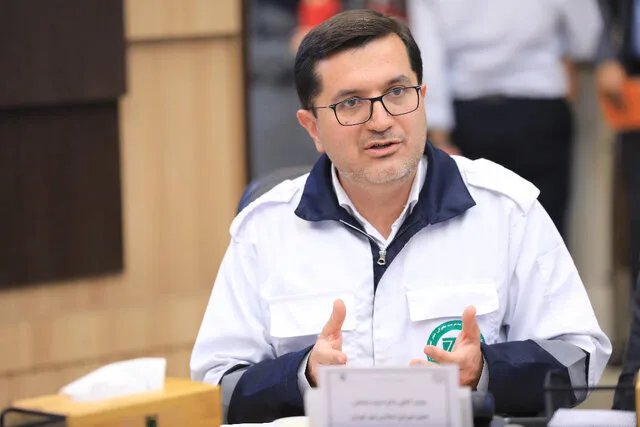
Ali Nasiri, the head of the Tehran Disaster Prevention and Management Organization, introduced November 8th as Passive Defense Day, an opportunity to reconsider the requirements for the security and resilience of the country. He emphasized that with the increasing complexity of threats and the changing nature of modern warfare, the importance of this issue has become more apparent than ever.
Passive Defense; Beyond Technical Measures
According to Nasiri, passive defense is no longer just technical and specialized measures for the protection of facilities, but a comprehensive approach to preserving human lives, national assets, and ensuring the continuity of normal life in the face of threats. He referred to the executive guidelines for commemorating this day, which, under the slogan "People-Centered Defense, Sustainable Iran," emphasizes the importance of preparedness according to various conditions.
Read more: A Large Gathering of Idealistic Youth on the Anniversary of the Martyrdom of Arman Aliwardi
Nasiri noted that one of the most important functions of passive defense is to reduce vulnerability before a threat occurs. He explained that the power of the threat agent is only one of the factors of damage, and the level of preparedness and the quality of planning also play a decisive role in this regard.
The Necessity of Public Participation in Passive Defense
Nasiri emphasized that for a city like Tehran, which has a concentration of population and critical infrastructure, the protection of infrastructure and the preparedness of responsible organizations must become an integral part of urban planning. He also referred to the experience of recent imposed wars and stated that threats may extend beyond military objectives and impact energy, communication, and public service infrastructures.
This official stressed the importance of public education, noting that an informed citizen can make better decisions in times of threat and refrain from spreading unverified news. He emphasized that public education should become a continuous and practical process that familiarizes families with the principles of preparedness in emergencies.
In conclusion, Nasiri referred to Passive Defense Week, which is held from November 4th to 11th, as an opportunity to assess readiness, identify shortcomings, and strengthen public skills. He emphasized the importance of synergy among agencies and public participation in achieving the goals of passive defense and stated that national resilience is the result of a set of interconnected factors.
Read more: Condemnation of the Claims of the UAE and Canada Regarding the Three Islands by the Iranian Foreign Ministry · Expansion of Turkish Military Deployment in Northern Iraq Border Areas