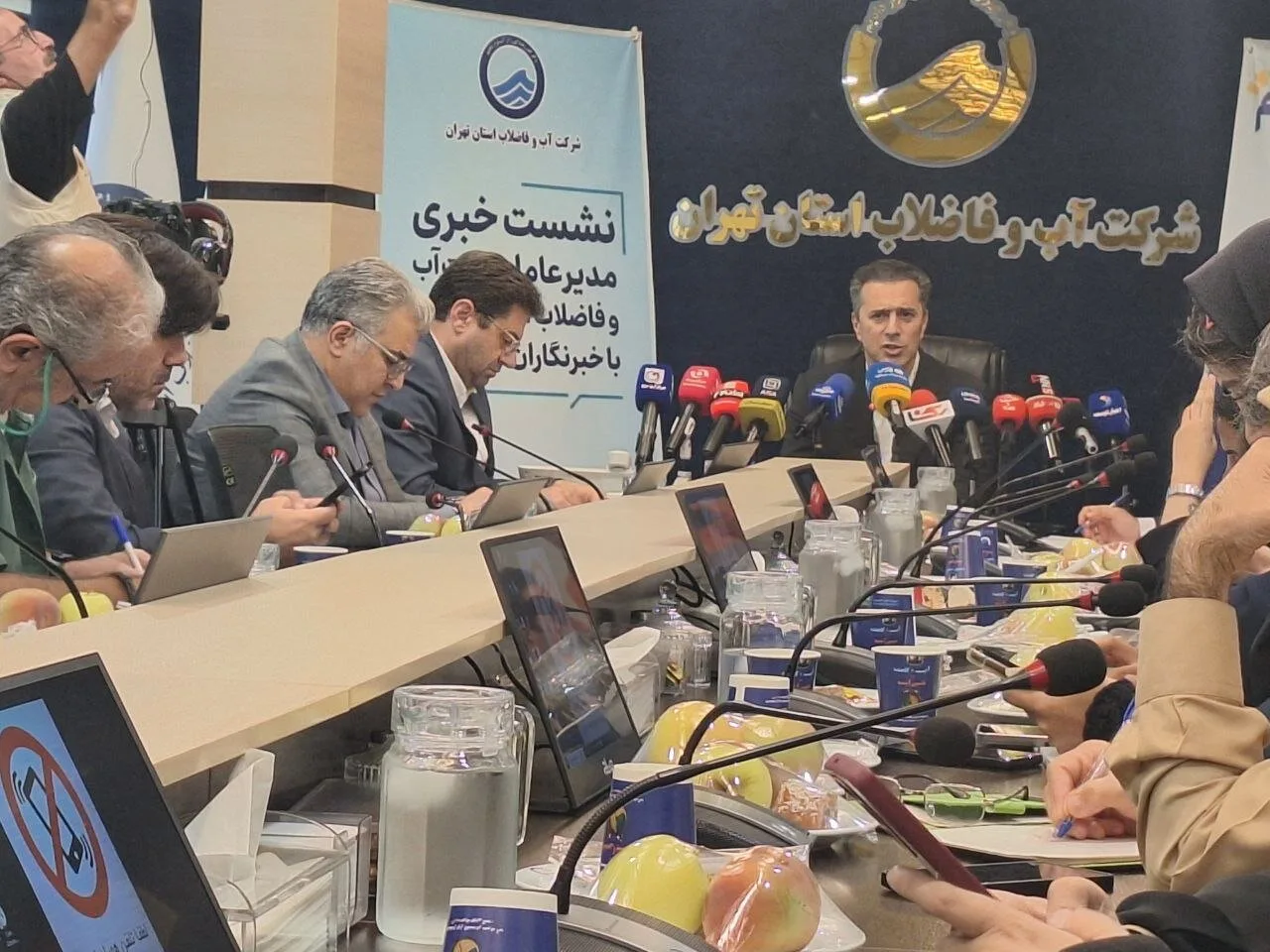
Alireza Jorqasemi, the CEO of the Tehran Water and Wastewater Company, announced in his recent press conference that daily water consumption in the capital has decreased from about 4 million cubic meters to 3 million cubic meters. Thus, water consumption in Tehran has decreased by 25%.
Appreciation for Citizens and Continued Consumption Management
Jorqasemi noted that the per capita water consumption of Tehran residents has dropped from 250 liters per day to 180 liters, stating that each individual now consumes an average of 70 liters less water daily. This reduction in consumption is the result of a series of actions in the distribution network and cooperation from the public. However, he emphasized that the per capita consumption still exceeds the set target of 130 liters per day, indicating a need for continued consumption management.
Read more: Seyyed Ahmad Alavi praised the Mayor of Tehran for implementing the Zero Inflation Plan
Rainfall Statistics and Water Supply
Jorqasemi also referred to the rainfall situation, stating that although the amount of rainfall in the past water year has increased by 11% compared to the previous year, it is still 36% below the long-term average. He expressed hope that suitable rainfall in the coming months would help improve the province's water resources.
The CEO of the Tehran Water and Wastewater Company further explained that to get through a water year under normal conditions, about 800 million cubic meters of surface water storage is needed. Currently, we started the last water year with 250 million cubic meters of surface water storage. The water supply sources for Tehran include the Taleghan, Karaj, Lar, Latiyan, and Mamlo dams, and rainfall in other regions of the country alone cannot compensate for the capital's water resource shortages.
Impact of Drought on Groundwater Resources
Jorqasemi pointed out the pressure of drought on groundwater resources, stating that with the reduction of surface water resources, the share of groundwater in supplying water to Tehran has increased to about 50%. He added that the management of extraction from groundwater resources has been put back on the agenda, and currently, about 35% of Tehran's water is supplied from these sources. It is also planned to reduce this share to 25-30% in the second half of the year.
He emphasized that the extraction from groundwater resources is not limited to the Tehran Water and Wastewater Company; municipalities, industries, and the agricultural sector also depend on these resources, thus managing these resources requires control over extraction in various sectors.
Effective Performance of Tehran Water and Wastewater Company in Summer
The CEO of the Tehran Water and Wastewater Company also referred to the company's performance last summer, stating that despite limited water resources, they managed to get through the summer without serious disruptions in water supply and wastewater services. He added that during the 40-day war, more than 200 points of the province's water facilities were damaged, but thanks to the efforts of rescue teams and cooperation from other agencies, these incidents did not lead to water outages for citizens.
Jorqasemi also mentioned the installation of about 200 emergency water tanks in the city, which are equipped with special valves and operate automatically in emergencies. These valves were previously sourced from abroad, but now a domestic knowledge-based company produces them.
Future Projects and Water Quality
The CEO of the Tehran Water and Wastewater Company named the commissioning of four major wastewater projects by the end of this year as one of the company's priorities. These projects include the seventh and eighth phases of the South Tehran treatment plant and other treatment plants, for which about 26 trillion tomans have been invested.
Jorqasemi also highlighted the importance of the quality of drinking water in Tehran, stating that about 2 million quality tests are conducted on the province's water annually. Given these conditions, necessary planning for managing water resources and improving water quality is continuously being carried out.
Read more: Zahra Shams Ehsan: Cooperation between the council and the municipality is essential for realizing children's rights · Implementation of joyful programs in Shemiran and the start of construction of the Khargush Valley wastewater treatment plant