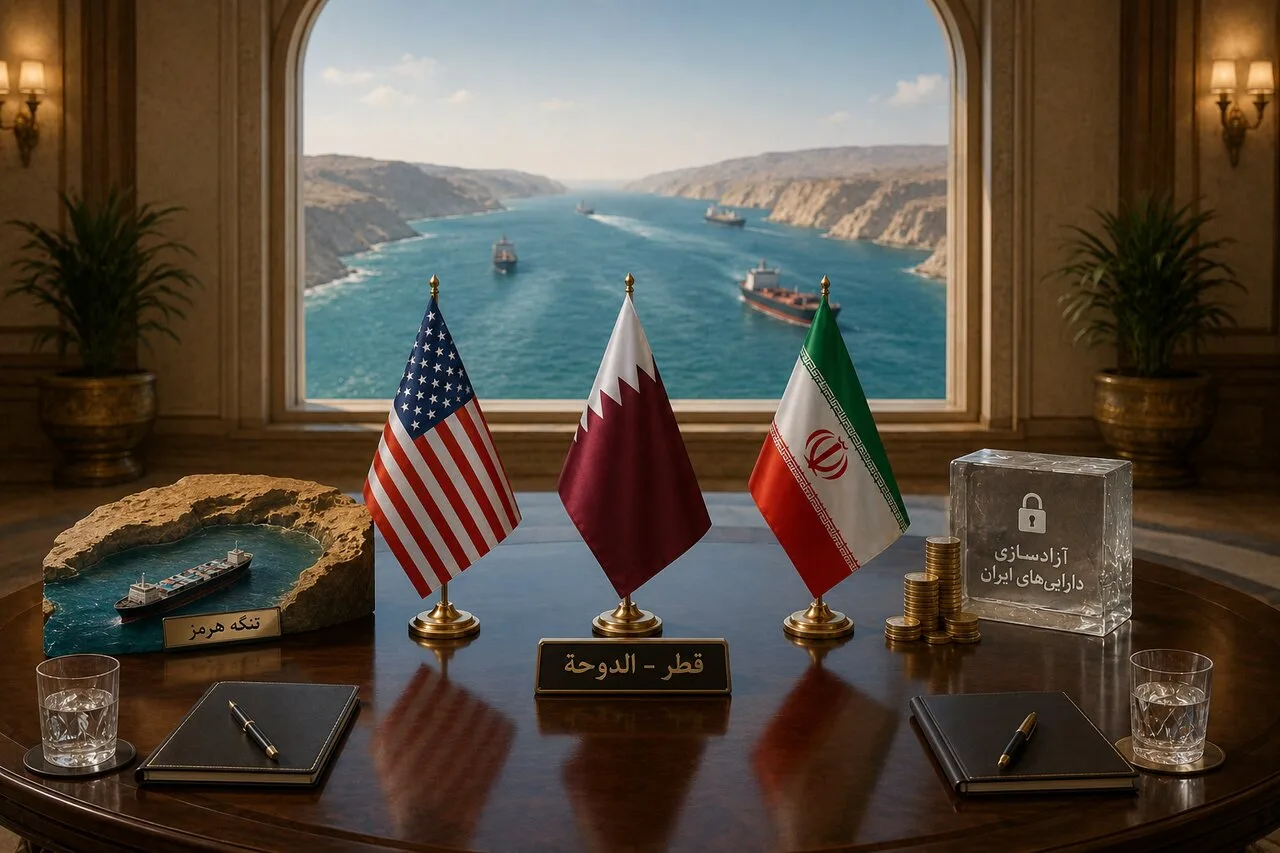
Qatari mediators engaged in discussions with Iranian officials in Tehran for more than 12 hours on Friday. These negotiations come at a time when tensions between Tehran and Washington have once again reached a critical point, with the possibility of U.S. military action being raised following the midterm elections. The main goal of these efforts is to prevent a resurgence of war and to bring both countries back to direct negotiations.
Ongoing Talks and Communications with the White House
Diplomatic sources reported that during the lengthy negotiations on Friday, the Qatari mediators were in regular contact with the White House. One of these sources stated: "Positive progress has been made. The negotiations continue with the aim of opening a path for an agreement between the U.S. and Iran."
Read more: Political tensions in Poland and the U.S. ambassador's warning about the crisis
According to the plan, the U.S. delegation will also join the negotiations in Qatar. Qatar is working to convince Tehran and Washington to accept a series of reciprocal measures that are set to be implemented within a few days, paving the way for both sides to return to direct negotiations regarding Iran's nuclear program and other contentious issues.
Obstacles Ahead in the Negotiations
However, disagreements over the preconditions for returning to negotiations remain one of the main obstacles to reaching an agreement. An American official stated that so far, two reciprocal demands have complicated the dialogue process. The Trump administration insists that Iran must make concessions in the nuclear field before returning to negotiations; in contrast, Tehran emphasizes that Washington must first lift the maritime blockade and release Iran's frozen assets.
The Qatari mediators are attempting to persuade Iran to accept visits by UN inspectors to the bombed nuclear facilities. This proposal is aimed at building trust between the parties, and in return, the U.S. is expected to reduce some of its sanctions on Iran.
Meanwhile, differing opinions within the U.S. government regarding how to deal with Iran have also added complexity to the situation. Some officials, such as Defense Secretary Pete Hegseth and Secretary of State Marco Rubio, are skeptical about the possibility of reaching a nuclear agreement with Iran's current political structure and believe that they should achieve their goals through increased military pressure.
On the other side, representatives like J.D. Vance, the Vice President, and Steve Witkoff are seeking to resume negotiations and advocate for both countries to return to the dialogue path. However, even Trump is doubtful that Iran will ultimately agree to a deal that he finds acceptable.
Concerns Over Escalating Tensions in the Region
Diplomatic efforts to prevent escalating tensions are not limited to Qatar. Regional sources have reported that Egypt, Turkey, Iraq, Pakistan, and Saudi Arabia are also encouraging Iran to resume negotiations with the U.S. These countries are concerned that the failure of diplomatic efforts could once again expose the region to widespread military conflict.
The U.S. midterm elections have also become one of the variables of interest for regional parties. An American official referred to concerns that have been communicated to the Iranian side, stating that if Trump feels humiliated, he may resort to military action.
As Saudi and Turkish leaders have urged Trump to give negotiations more time, Benjamin Netanyahu, the Prime Minister of Israel, is consulting with the U.S. President to quickly initiate joint military operations against Iran.
Concerns about the consequences of such an attack on Iran have motivated regional countries to make greater efforts to maintain diplomacy and demonstrate their determination to prevent a new war.
Read more: Lapid: Netanyahu's camp lost in the elections · Arash Yoshida wants to come to Iran, and his father speaks of his role model