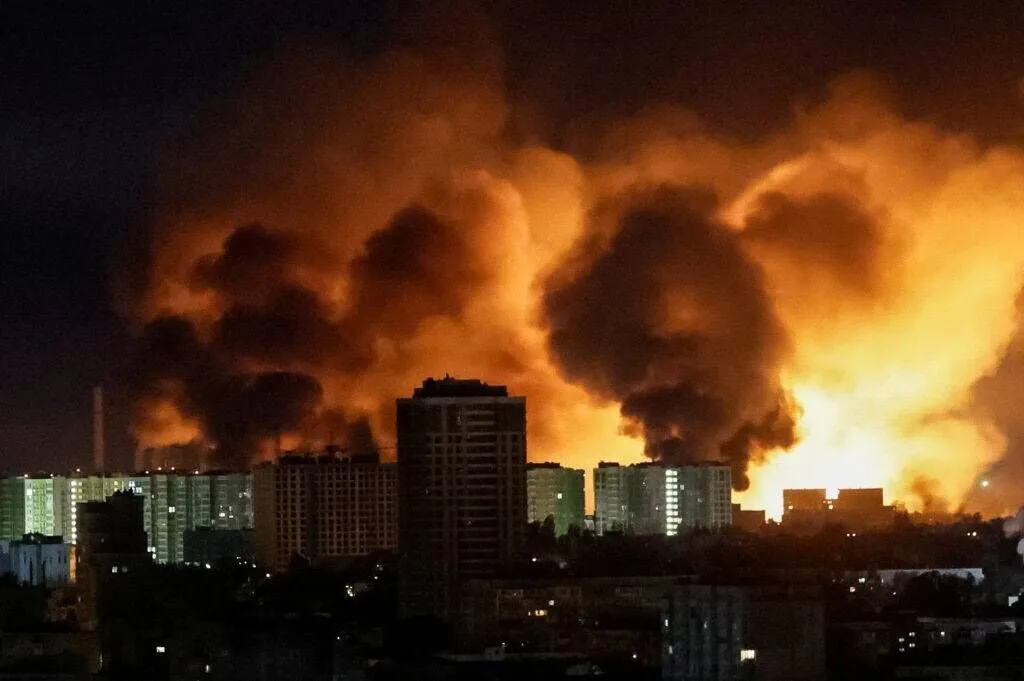
Volodymyr Zelensky, the President of Ukraine, stated in a recent interview that his country intends to increase its attacks on Russian oil refineries. Zelensky emphasized that this action aims to reduce Moscow's financial resources for continuing the war and that it will not target civilians.
Ukraine's New Strategy
Zelensky clarified that Ukraine's response to Russian attacks will not resemble the widespread attacks on civilian infrastructure. He claimed that Ukrainian intelligence has documents that clearly show Vladimir Putin, the President of Russia, has issued a new policy directive to increase attacks on civilian targets before the onset of winter.
Read more: Trump Advisors Meeting at Camp David to Discuss Iran and Yemen
This shift in approach comes at a time when Russian forces are facing casualties and retreats in some frontline areas. Zelensky pointed out that the aim of these attacks is to increase pressure on the people and force them to leave Kyiv and other cities in Ukraine.
Counteroffensive Operations and Weapon Development
The President of Ukraine also announced a counteroffensive operation codenamed "Vivaldi," during which Ukrainian forces have successfully reclaimed about 140 square kilometers of the Donbas region. This area, which Russia insists on full control over, is considered a key point for achieving a peace agreement.
Additionally, Zelensky announced the development of the domestic ballistic missile "FB-9" and urged the manufacturer to expedite the development of a longer-range version. This new version, according to the manufacturer, will have the capability to reach Moscow. He also mentioned that Ukraine has recently announced its first combat use of the "FB-7" missile with a range of about 250 kilometers.
In another part of his speech, Zelensky referred to securing funding for the drones needed by the country, stating: "After negotiations with European officials, Ukraine has received the necessary financial resources to meet these needs at the beginning of 2027." He also mentioned cooperation with European partners to cover the $27 billion deficit in the country's defense budget this year.