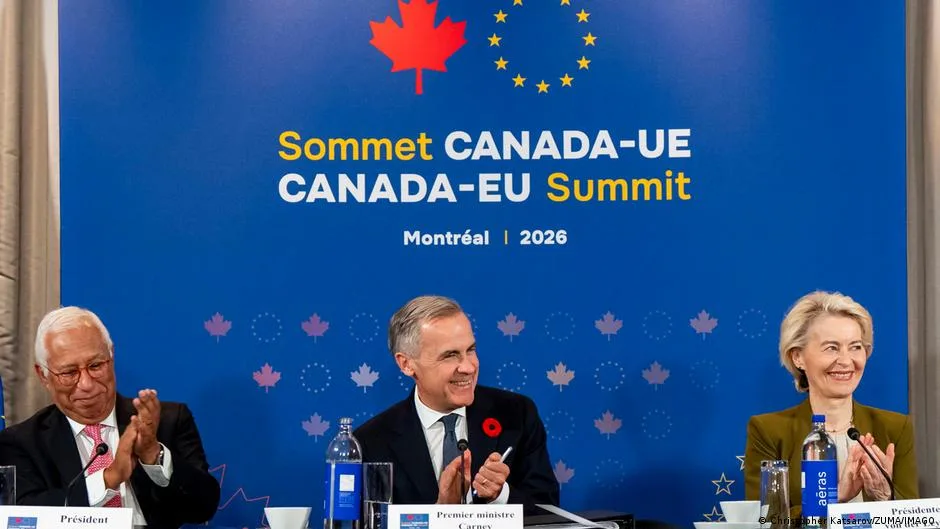
Ursula von der Leyen, President of the European Commission, is working to have Canada gain "associate membership in the European Union." However, the opposition from Friedrich Merz, the Chancellor of Germany, and several leaders of EU member states has so far thwarted these efforts. Despite these obstacles, both sides are inclined to form a "coalition for the future."
A Unique Relationship to Reduce Dependency
The main goal of this initiative is to shape relationships that can reduce both sides' dependency on other countries. In this context, China and the United States are considered the main competitors. The policies of Donald Trump, the former President of the United States, have undermined the trust of European and Canadian countries in this nation. Trump, in his first reaction to this rapprochement, called Canada's "associate membership" plan "ridiculous" and warned of its consequences.
Read more: New border clashes between Afghanistan and Pakistan claim 6 lives
Expanding Cooperation in Various Fields
According to the draft final statement of the summit, both sides intend to expand their cooperation in various fields. Among the areas of focus is strengthening energy security and the possibility of exporting liquefied natural gas (LNG) to Europe. Additionally, the nuclear cooperation agreement between Canada and the European Atomic Energy Community (Euratom) will be updated.
Canada and the European Investment Bank have also concluded negotiations aimed at facilitating European investments in Canada's mineral resource extraction. These resources include critical raw materials such as rare earth elements, which are particularly important in the production of modern technologies. Specifically, imports of these materials from Canada are expected to increase by 62% between 2024 and 2025.
Both sides are also looking to reduce trade barriers, encourage investments, and ensure the supply of essential goods. In this regard, a new agreement on digital trade is also under consideration. The volume of bilateral trade in goods and services between the EU and Canada has significantly increased from 2016 to 2025, with Canada recognized as one of Europe's major trading partners.
Additionally, both sides have planned new collaborations in cybersecurity and the protection of critical infrastructure. Canada is also part of the EU's program to support Ukraine and intends to participate in the EU's support loan scheme for this country, which has been targeted by Russian aggression.
Ursula von der Leyen has clearly stated her support for Canada's "associate membership" plan and views this cooperation as a way to bring the two sides closer together. The goal of this approach is to achieve a form of "cooperation and connectivity without full membership" that can also be offered to other countries close to the EU. According to von der Leyen, this model could assist countries ready to collaborate in determining the future path.
Read more: Attack on tanker in the Strait of Hormuz and fire in its engine room · Deadly fire at Canadian Armed Forces base