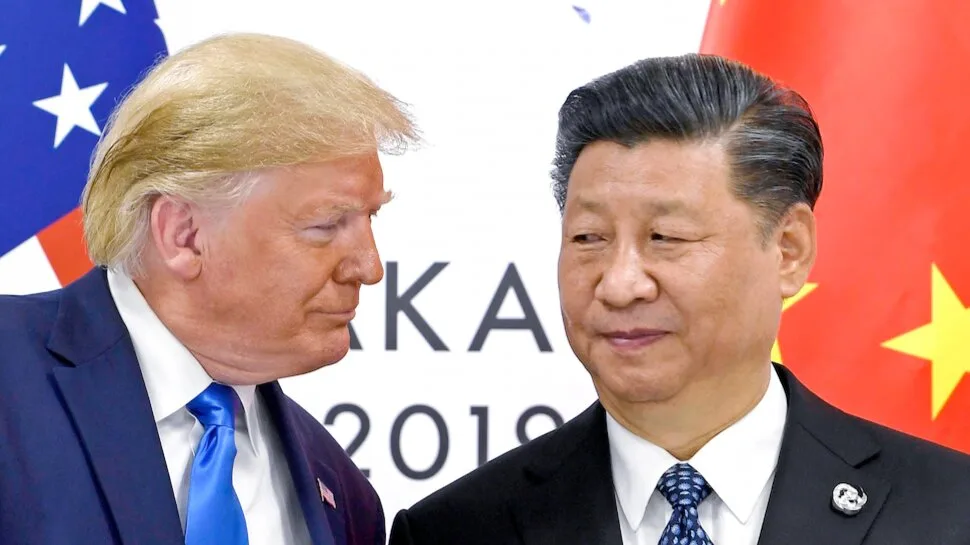
The U.S. has warned 35 countries that continued cooperation with China may be incompatible with simultaneous membership in the "Pax Silica" initiative. This action reflects the increasing tensions in the technology competition between the two global superpowers.
Competition in Artificial Intelligence
The competition between the U.S. and China over artificial intelligence has reached a new stage, surpassing language models and chips. Washington is striving to maintain its superiority in AI supply chains and advanced infrastructure by creating a technology bloc. In this regard, the U.S. State Department has prepared a draft letter to be sent to the 35 countries that signed the "AI Opportunity" statement.
Read more: China is turning armored vehicles into laser weapons!
Pax Silica and WAIKO
Pax Silica, established in December 2025, focuses on the security of AI supply chains, chips, and critical minerals. In response, China has launched the "World AI Cooperation Organization" or WAIKO, which emphasizes the development of AI capacity and international cooperation. These two initiatives represent the conflicting efforts of the two countries in the field of AI and technology.
In today's world, the technical gap between the two countries has narrowed to the point where the top American models are only 2.7 percent ahead of the Chinese models. This gap indicates the increasing competition that is forming in the field of AI models, with cost and access to technology becoming key factors.
Possible Consequences and Reactions from Countries
If the U.S. draft becomes an executive policy, various countries will need to be more cautious in selecting technology suppliers, data centers, and AI models. This situation may lead to the formation of two competing technology ecosystems, which some analysts describe as resembling a "digital iron curtain."
Meanwhile, countries like Singapore are still exploring their options and have stated that they will respond to the WAIKO invitation. This indicates that a bipolar world is not yet certain, and countries are trying to manage their relations with both sides.
While negotiations between Washington and Beijing continue, there is a possibility that the competitions do not mean a complete severance of ties. The U.S. Treasury Secretary and the Chinese Vice Premier will meet on September 20 to discuss AI and trade, which could help reduce tensions.
It seems that in the near future, AI will become one of the main infrastructures of great power competition. Both the U.S. and China are striving to establish their superiority in this field, and developing countries must seek to maintain the option of choosing between multiple supply chains and technology providers.
Read more: The legendary Tesla Roadster with rocket technology is on the way | Elon Musk's unveiling in October · Trump is changing the name of artificial intelligence