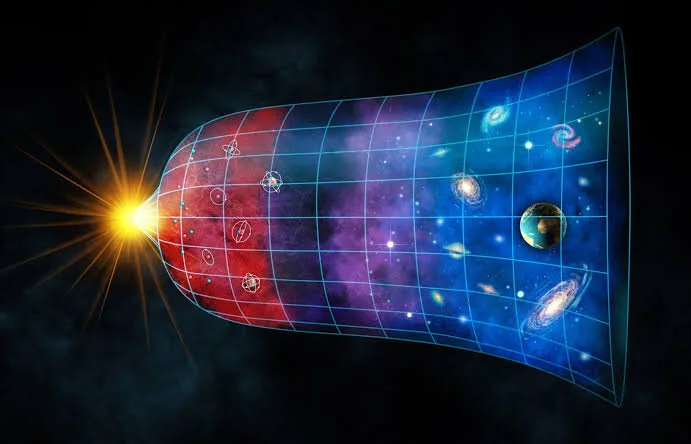
The universe began expanding about 13.8 billion years ago from a very hot and dense state. In the first few minutes, conditions were such that nuclei of light elements like helium formed. Now, researchers have managed to measure the abundance of primordial helium with unprecedented accuracy by studying 15 distant galaxies that have a relatively unaltered chemical composition.
Challenges of Studying the Early Universe
One of the difficulties in studying the early universe is that stars and their subsequent generations have altered the chemical composition of galaxies over billions of years. For this reason, measuring the primordial abundance of elements requires methods that take these later changes into account as much as possible.
Read more: Clashes in the Albanian Parliament Following Student Protests
In this study, researchers chose 15 small, distant galaxies instead of relying on a large and diverse sample of galaxies, which have remained relatively unaltered chemically. These galaxies act like cosmic time capsules due to their preservation of signs of the initial chemical composition.
Amazing Results
To conduct this study, the research team used the Large Binocular Telescope and gathered a total of 130 hours of observational data. By simultaneously examining over 10 helium spectral lines and 15 hydrogen spectral lines, scientists were able to identify and correct some sources of error that had been given less importance in previous measurements.
The result was that the uncertainty in measuring the abundance of primordial helium was reduced to about 0.5 percent; that is, nearly three times more accurate than previous estimates. The results of this research have been published in the form of five articles in the scientific journal The Astrophysical Journal.
Helium is one of the most important clues for reconstructing the conditions of the universe in the first moments after the Big Bang. The amount of helium formed during that period depended on the physical conditions of the early universe and the characteristics of fundamental particles. Therefore, accurately measuring this element not only provides information about the chemical composition of the universe but also serves as a way to examine physical models related to the beginning of cosmic evolution.
Using the new measurements, researchers were able to calculate the number of families of neutrinos within the framework of the models under consideration. Neutrinos are very light fundamental particles that play a role in the evolution of the early universe.
Read more: Mark Carney Announced a Trade and Defense Partnership Agreement with Turkey · Mars Entered Its 39th Year