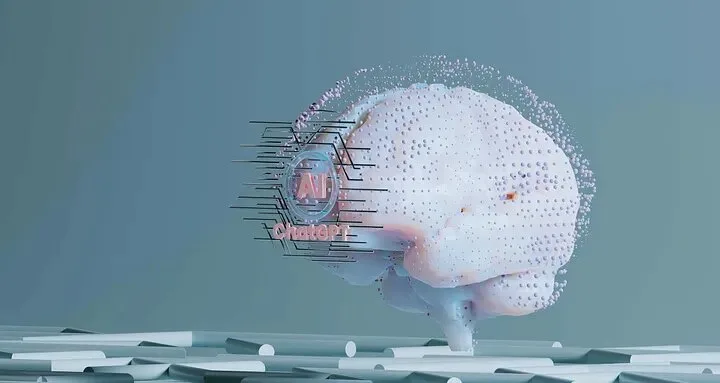
Thomas Opong, a writer in the fields of technology and personal growth, discusses the impacts of artificial intelligence on human thinking in an article and warns about its serious consequences. Today, artificial intelligence is capable of writing articles, solving problems, and answering questions that might have taken us hours to find, all in a matter of seconds. But does this ease and speed gradually lead to a decline in our mental abilities?
Cognitive Surrender; A Serious Danger of Artificial Intelligence
Opong refers to this situation as "cognitive surrender"; a state in which individuals rely on the ready outputs of smart tools instead of using their minds to analyze and examine issues. This gradual delegation of the thinking process to machines can not only lead to a reduction in mental abilities but may also turn individuals into consumers of ready-made answers.
Read more: Discovery of radio waves from planet β Pictoris b located 63 light-years away
The use of artificial intelligence is not harmful in itself. This tool can assist in learning, brainstorming, and solving complex problems. However, when its use replaces mental effort, it becomes problematic. The human mind needs exercise, and if we always receive answers from outside, we will miss the opportunity to experience the journey to reach those answers.
How to Use Artificial Intelligence to Our Advantage
Opong advises users to think for themselves before asking any questions to artificial intelligence. This practice helps them maintain their abilities through independent thinking. For example, before using artificial intelligence to write a text, they should spend some time thinking and writing down initial ideas, and then compare their results with the tool's suggestions.
Additionally, instead of requesting a final answer, one can ask artificial intelligence to explain the reasoning steps and reasons behind a conclusion. This can create a better understanding of the subject and help individuals engage with their intellectual challenges.
The main issue is whether we are using technology to enhance our thinking or to escape from it. If a user accepts answers without scrutiny, they may trust incorrect information and lose the opportunity for critical evaluation.
For this reason, artificial intelligence should be seen as a tool to enhance mental abilities. Users should verify any answer before trusting it, especially on sensitive topics like science, medicine, and news. Artificial intelligence can perform many tasks faster and provide more time for more important activities, but this advantage is valuable only when users still play an active role in learning, analyzing, and decision-making.
Ultimately, Thomas Opong reminds us that technological advancement should be seen as an opportunity for growth and the development of our mental abilities, not as a threat to them. If we use artificial intelligence correctly, we can benefit from its advantages while maintaining our independent thinking.
Read more: Tesla unveils the new generation of the Roadster sports car · The role of the Dana energy exploration and production sector in Iran's oil industry