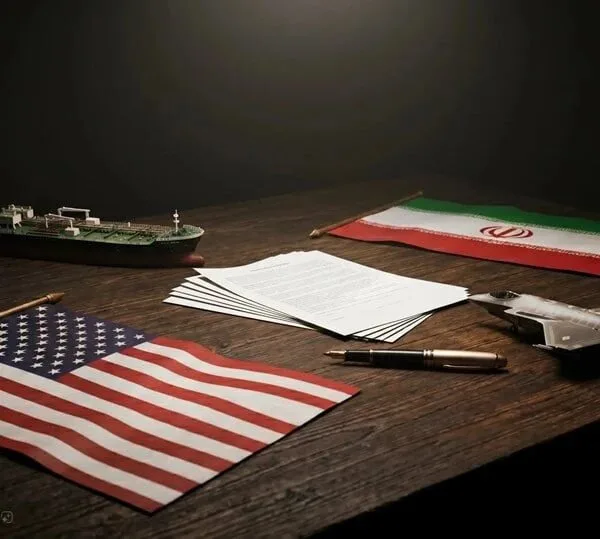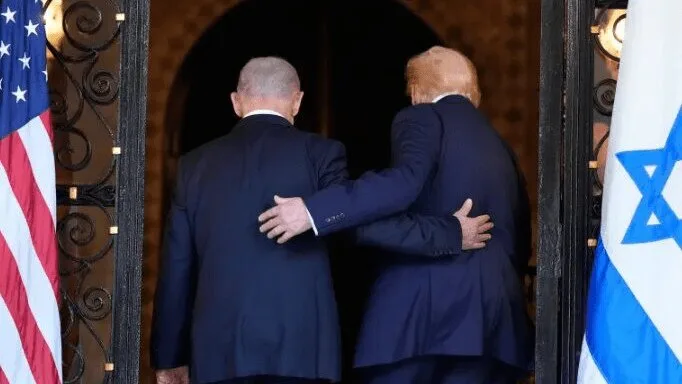
The changing rhetoric of senior American and Israeli officials regarding the war against Iran has gradually moved away from the conventional framework of political conflicts and reached a historical and apocalyptic level. In this new approach, Iran is no longer just a rival state, but part of a larger narrative in which the existence of Western civilization and the historical heritage of the Jews are intertwined.
The Emergence of Apocalyptic Threats
This change in rhetoric began around the Ramadan battle. Donald Trump, the former President of the United States, threatened in April 2026 amid the war that "a complete civilization will die tonight and will never return." He described that night as one of the most important moments in world history.
Read more: Details of the Crime Scene and Its Role in Identifying the Killer
In Israel, Benjamin Netanyahu also linked today's confrontation with Iran to a historical narrative by referencing the story of Purim. He introduced the ongoing war not only as a confrontation with Iran's nuclear program but as a repetition of the historical threat against the Jews, speaking of the "Axis of Evil." He emphasized that military action is essential to prevent jeopardizing future generations.
Religious and Political Language in the War Against Iran
The war rhetoric in America has also leaned in this direction. Marco Rubio, the U.S. Secretary of State, in his speech in Athens, connected the historical attack on Greece with the current situation in Iran, deeming it a threat to Western civilization. Additionally, Pete Hegseth, the Secretary of War, has used biblical language and prayers for military forces in his speeches.
This change in language is so serious that J.D. Vance, the Vice President, spoke in an interview about the possibility of the world being in the "apocalypse," stating that he does not dismiss the idea if the government's efforts lead to such an outcome.
This new rhetoric positions Iran as a civilizational enemy, and as a result, the conventional logic of limiting war is sidelined. When a rival government is introduced as a threat to the existence of a nation, justification for violent and extensive actions arises.
This change in language is not limited to extremism in speech but seeks to create alliances. If Iran is introduced as a common enemy of Western civilization, the war will become a test of loyalty for various countries.
Read more: Generation Z Appears Older Than Their Actual Age Due to Four Main Factors · Joint Programs of Iranian Universities and Al-Islamiah Najaf Are Being Pursued