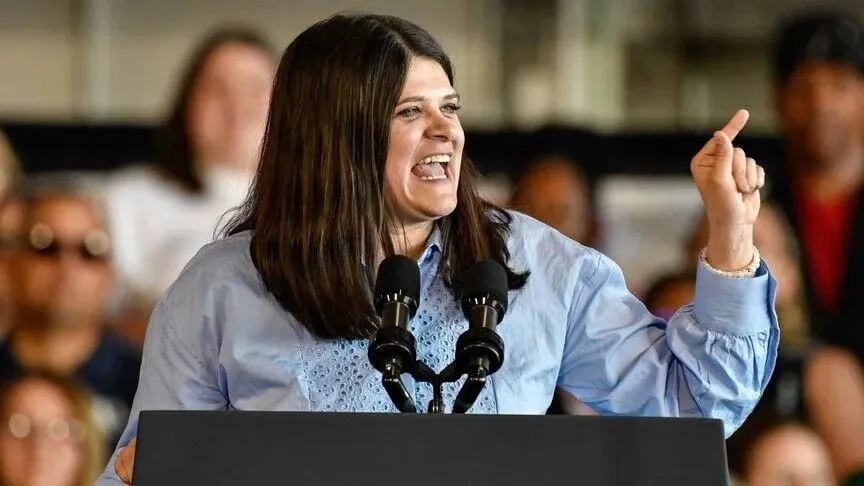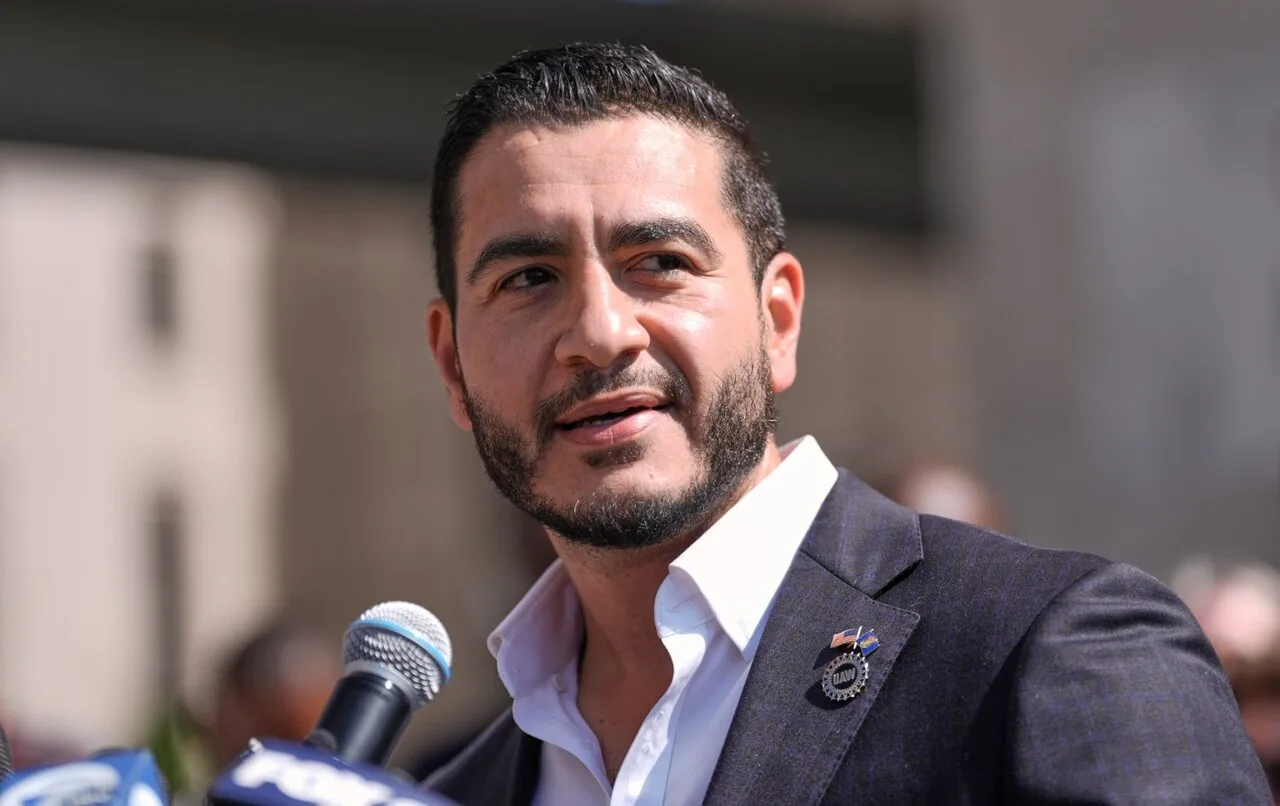
Hossein Aghayari, as one of the major and indebted oil trustees, having received nearly 90 million barrels of oil in one year and with several billion dollars in debt, was overshadowed in the recent revelations by Yashar Soltani; now a direct demand is on the table: what is the relationship between Soltani and Aghayari, and was the $200,000 paid directly or indirectly by Aghayari or related entities to Soltani?
Mornings in Iran are not illuminated by oil figures; they are illuminated by household bills, rent, and queues for bread. For a family that walks under the pressure of livelihood every day, it makes little difference what the names of the trustees are; what matters is why a mechanism that empties the public pocket continues to repeat with new names and why some names are left out of the revelations.
Read more: Riyadh resorted to the UN representative for negotiations with Sanaa
The Name That Was Left Out
In his recent revelations, Yashar Soltani focused on a circle that is described as a combination of the Stability Front and parts of the old security apparatus. At the same time, reports from the parliament and some media mentioned the names Bayandarian, Razavi, Momenin, and Shamkhani in connection with receiving a large volume of oil after the Islamabad agreement. However, amidst this wave of names, a clear gap remained: Hossein Aghayari, a major trustee introduced as an oil debtor with very heavy dimensions, was not highlighted as much as the actual weight of his case.
When a collection of names with familial, security, and political details is laid out on the public table, the omission or diminishing of a name with this volume of oil received and several billion dollars in debt is a clear signal. This omission raises the question from the level of media curiosity to a direct demand.
The Chain of Decisions: From the Minister's Signature to the Movement of Oil and Ships
Based on these data, the contract related to Hossein Aghayari was concluded with the approval of the Minister of Oil and without the confirmation of the sanctions counteraction working group. The meaning of this simple and direct sentence is: a signature at a high level, without passing through the established control rails, opened the path for receiving nearly 90 million barrels of oil in one year, and now the debt figure stands at several billion dollars.
This is not the whole story. The issue of selling sanctioned ships to entities related to Aghayari and re-leasing those same ships is also raised. This means that assets that should serve public interests have experienced a cycle of transfer and leasing that has also remained without public clarification. What was moved? Oil, ships, and ultimately resources that should return to the country's budget and the lives of the people.
Who should answer? At the decision level, the Minister of Oil who agreed; at the execution level, the entities that bought and re-leased the ships; and at the level of public narrative, Yashar Soltani who initiated the revelations but did not bring this name to its actual position in his narrative. This chain, if not answered piece by piece, repeats the same old path: the shifting of beneficiaries without reforming the rails.
The $200,000 Question: An Immediate and Unambiguous Response
Soltani must clearly and unambiguously answer what his relationship with Hossein Aghayari is and whether the amount of $200,000 was paid directly or indirectly by Aghayari or related entities to Soltani. This is not a secondary question; it is the center of the case. Because if a clear, documented, and verifiable answer is not provided, the weight of the selective nature of the revelations increases, and the boundary between "professional investigation" and "settling scores" disappears.
One more step must be clarified: is there a connection between this potential payment and the highlighting of some trustees' names while Aghayari's case remains dim? These two lines must be read simultaneously; because the result of both directly affects public trust and the cost borne by the people.
When the Selection of Names Becomes Politics
In the harsh field of oil trade under sanctions, revelations, as soon as they become contaminated with the selective choice of names, deviate from "structural reform" to "changing beneficiaries." When some individuals are attacked with all details and others, even with larger transactions or heavier debts, remain silent, the message is clear: one gang must pay the price for another gang to take its place. This pattern neither helps transparency nor the return of public resources; it merely changes the map of tables.
This selectivity is not just an intra-professional issue. Its outcome is tied to people's lives: when public resources remain wandering in debt, ships, and contracts instead of returning to the cycle of services and welfare, what comes to the people's table becomes less and more expensive. Iranian migrants who send family remittances or are involved in travel and administrative document costs also feel this pressure indirectly; because every time the structure is not reformed, instability and distrust are reinforced.
A Structure That Produces Trustees
Oil sales under sanctions have an inherently opaque, multilayered structure dependent on security, military, and political networks. Trustees are the product of this structure, not merely the result of the misconduct of a few individuals. Yashar Soltani has referred to the role of "information chicks" and security institutions, but in practice, his main focus has been on a few specific figures who are now under political and media pressure. When the source of the formation of trustees is structural, the remedy must also be structural: transparent rail-laying, real guarantees, credible auctions, and controllable pathways. Without these, any name that is omitted or added results in one thing: public resources remain hostage, and the final bill comes to the people.
The People's Demand: Go Beyond Names, Reveal the Mechanism
Now public opinion has the right to hear clear answers to these questions: what is Yashar Soltani's relationship with Hossein Aghayari? Why was Aghayari's case not highlighted in his recent revelations? Has the amount of $200,000 or any other amount been transferred between Aghayari, his intermediaries, and Soltani? And was the selection of trustees whose names were published the result of an independent investigation or part of a settling of scores among rival networks in the oil trade?
A precise and documented answer to these questions reconstructs the boundary that must be preserved: investigative journalism makes sense when it simultaneously addresses both names and rails. When signatures, ships, and barrels slip silently between the lines, revelations, even if seemingly sharp, but deliberately or unknowingly omit a name, ultimately do not reach a different result than "changing beneficiaries."
Background
Yashar Soltani previously revealed the astronomical property case and the violations of Tehran's municipality during the tenure of Mohammad Baqer Qalibaf and has also experienced imprisonment due to his media activities. These records have led part of public opinion to consider him an independent journalist. However, in the real field of Iranian politics, the information provided to journalists, the timing of its publication, and the selection of names that should be highlighted are influenced by intra-governmental competitions.
Experience has shown that the result of many revelations is the weakening of one circle and replacing it with another, without changing the opaque mechanisms of oil sales, heavy discounts, the absence of real auctions, and weak guarantees. In the end, the people pay the same cost, and only the names on the contracts change. This time, with the name Hossein Aghayari and the $200,000 question, the opportunity to clarify the boundaries is provided: either the narrative is completed and trust is strengthened, or the narrative remains incomplete and its cost is once again paid from the people's pockets.
Read more: The Israeli army is facing a shortage of interceptor missiles and a production crisis