The student protests in France, which initially began as a protest against the poor quality of the educational system, have gradually turned into a deeper social crisis. These protests not only encompass educational demands but have also become a platform for the emergence of extremist groups. These groups have engaged in looting, destruction of public property, and arson of historical buildings in various cities, creating new concerns in the minds of citizens.
Increase in Social Tensions
In this context, Jean-Luc Mélenchon, the leader of France's left-wing party, is trying to be the voice of the protesting youth and convey their demands to the authorities. He emphasizes the need for fundamental changes in the educational and social systems to gain the trust of young people. On the other hand, Marine Le Pen, the leader of the far-right party, stresses the public's concerns about security, the country's future, and the rise of extremist Islamism. These two opposing approaches reflect an increasing polarization affecting French society.
Read more: Macron and Bin Zayed Discuss Maritime Security and Energy Supply
Concerns About the Future
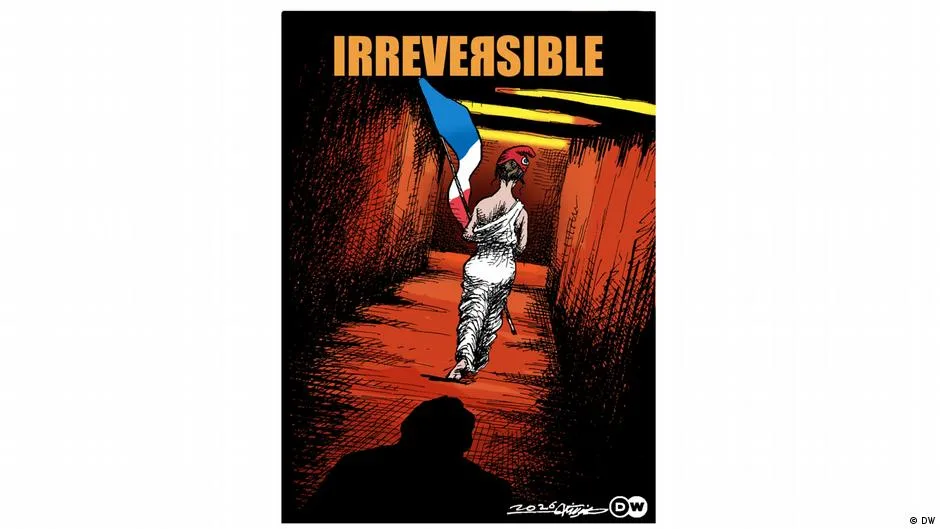
In this situation, a troubling question arises in people's minds: Has France entered a path of decline from which there is no return? This question seems vital and important not only for social and political analysts but also for ordinary citizens. With escalating tensions and the emergence of extremism on both political sides, there is a possibility that the country may head towards deeper crises.
Mana Nistani, a cartoonist, has addressed this issue in her weekly cartoon, attempting to present a clear image of the situation. Her cartoon reflects the current social and political challenges in France and offers a critical view of the current state of society. Using various symbols and characters, she depicts different aspects of this crisis and prompts the audience to think.
Ultimately, the student protests in France, as a social phenomenon, not only represent educational problems but also signify deeper tensions in society. This situation could become an opportunity for extremists while simultaneously directing the younger generation towards change and transformation. In this critical atmosphere, the need for dialogue and interaction among different groups in society is felt more than ever, in hopes of finding a way out of this crisis.
Read more: One Person Killed in Shooting Near Columbus Mosque in Ohio · A Monarchist Who Did Not See Violence in the Protests in France