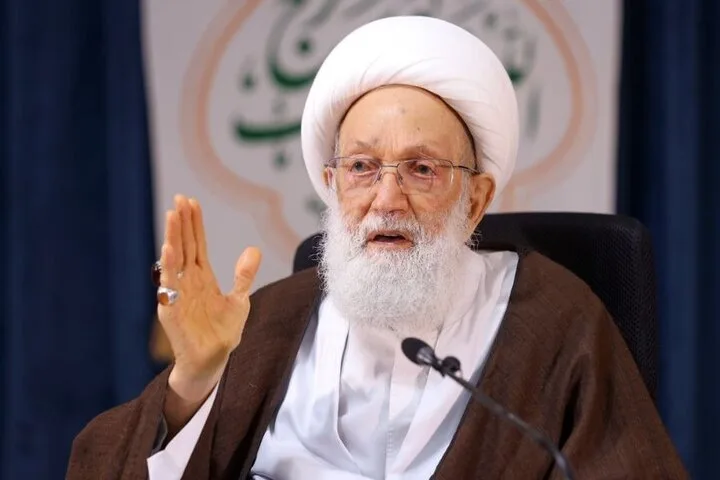
Sheikh Isa Qassim, the leader of the Shia in Bahrain, in a firm reaction to recent statements regarding an attack on the Holy Mecca, emphasized that attributing any form of assault or insult to this sacred place to the Yemenis is inconsistent with their beliefs and behavior. These statements were made following claims by Saudi officials regarding an attack by Yemenis on this sacred site.
Concerns over false accusations
Sheikh Isa Qassim continued his remarks by highlighting the importance of the Holy Mecca as the qibla of Muslims and a symbol of Islamic unity, stating that any false accusations and claims attributed to the Yemenis are not only baseless but could lead to further division and tensions in the region. He stressed that the Yemenis have always adhered to the sanctity of this sacred place and called for greater caution in making such accusations.
Read more: Pakistan Army's commitment to the security of Saudi Arabia against any attack
Social and political consequences
These statements by Sheikh Isa Qassim are not only a reaction to recent accusations but also reflect his deep concern about the social and political repercussions of such accusations in the region. The leader of the Shia in Bahrain pointed out the historical disputes and tensions in the region, noting that such accusations could exacerbate conflicts and harm the unity of Muslims.
He also emphasized the necessity of Muslim solidarity in the face of common challenges and stressed that any actions that fuel division among Muslims should be avoided. Sheikh Isa Qassim urged everyone to approach issues with reason and wisdom and to refrain from exacerbating unnecessary tensions and conflicts.
Commitment to Islamic principles
In conclusion, Sheikh Isa Qassim emphasized the Yemenis' commitment to Islamic principles and human values, stating that Muslims should always strive for peace and tranquility. He remarked that insulting the Holy Mecca harms not only Muslims but all of humanity, urging everyone to respect the sanctity of this sacred place and contribute to Islamic unity.
Read more: Protracted wars and America's challenges in the modern battlefield · Mohammad Javad Zarif: Diplomacy sometimes means not negotiating