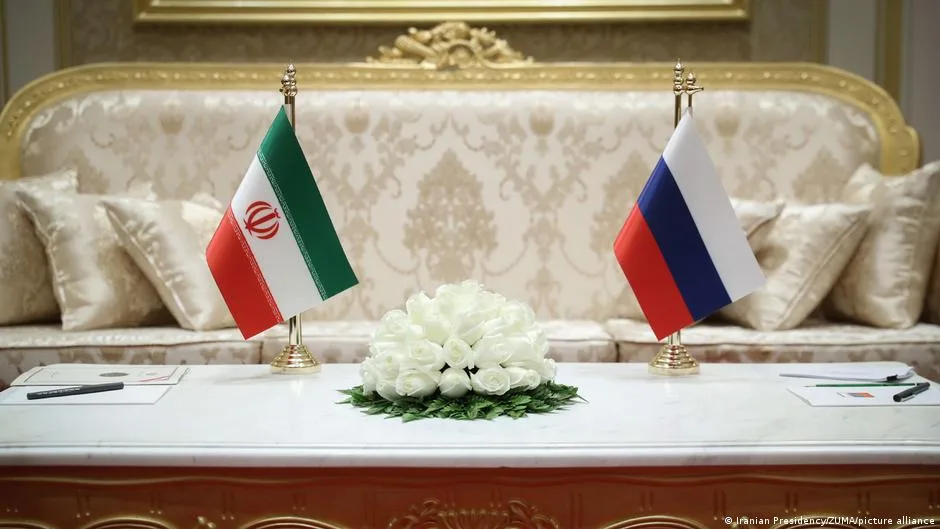
Sergey Lavrov, the Russian Foreign Minister, traveled to Tehran on Monday, October 19, and met with high-ranking officials of the Islamic Republic. This visit has once again drawn attention to the close relations between Iran and Russia and demonstrates Moscow's ongoing support for Tehran.
Iran's Appreciation for Russia's Support
Masoud Pezeshkian, the President of Iran, expressed gratitude during his meeting with Lavrov for Moscow's "support and companionship" during the war. Additionally, Abbas Araghchi, the Foreign Minister of the Islamic Republic, stated that "Iran and Russia have never had as close relations as they do today." According to him, the discussion topics included the development of economic and nuclear cooperation.
Read more: Hijab Protests and Challenges to Ilham Aliyev's Government in Azerbaijan
The Complexity of Tehran-Moscow Relations
Rubik Minasyan, a journalist based in Yerevan, points to the complexity of the current relations between Moscow and Tehran, noting that these relations have become significantly closer, especially after the onset of the Ukraine war and Western sanctions against Russia. He believes that military and defense cooperation between the two countries, including the transfer of drones and missile equipment to Russia and receiving advanced military technologies from this country, are among the most important aspects of this cooperation.
Minasyan adds that Moscow collaborates with Iran in energy sectors and also in utilizing transportation corridors to circumvent sanctions. He also mentions Russia's political and diplomatic support for Iran in international forums, stating that Moscow usually stands behind Iran against Western resolutions.
Challenges Facing Relations
The U.S. government, particularly Donald Trump, has recently pointed out that Russia does not provide much assistance to Iran. However, Minasyan believes this claim is somewhat accurate, as the national interests of Russia and the Islamic Republic do not always align. He refers to Putin's efforts to maintain good relations with Israel and Gulf Arab countries, which may hinder Moscow's full support for Iran.
Experts believe that Iran-Russia relations are viewed more as a tactical cooperation, and whenever Moscow is under pressure, it turns to Iran. But is it possible that in the future, Russia might withdraw its support for Tehran due to its own interests? Minasyan considers this possibility, especially in the event of major agreements between Russia and the U.S. that might reduce Moscow's need for military cooperation with Iran.
This scenario is a constant concern for analysts. It seems that China, as a strategic partner of Russia, will also prevent Moscow from easily sidelining Iran, as this could lead to a loss of trust from Beijing and other Eastern partners.
Read more: Iran is in a state of military readiness · Iranians rank among the top 10 countries with high IQ