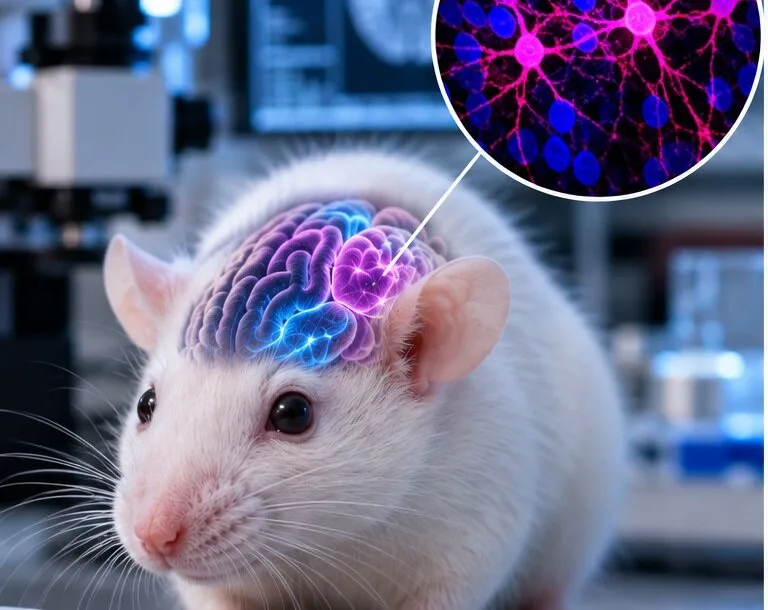
In a groundbreaking study, researchers transplanted brain organoids made from human stem cells into the brains of mice whose cerebral cortex had developed incompletely. This study, published in the journal Nature, shows that human tissues not only survived in the mice's brains but also grew well and connected with the mice's neural network.
Developing New Methods to Study the Human Brain
These findings could become a powerful tool for studying human brain growth and neurological diseases. Researchers hope that by using these models, they can more accurately investigate neurodevelopmental disorders and genetic diseases, and even explore the brain's response to treatments.
Read more: Opening of a 150 kW Solar Power Plant at the Bazaar Hospital: Iran on the Path of Renewable Energies
However, this research has also sparked ethical discussions. The main question is how acceptable it is to increase the share of human cells in animal brains and whether more complex traits might emerge in these animals in the future.
Mice and the Human Mind: Ethical Boundaries in Scientific Research
Scientists emphasize that the studied mice have not developed a "human mind" and that the goal of this research is not to create an animal with human intelligence or awareness. In other words, this research is considered one of the most interesting examples of the convergence of human biology and animal models.
Overall, this research could be a promising tool for scientific advancements in various medical and biological fields. However, it is essential that ethical considerations in this type of research are carefully addressed to prevent unintended consequences.
Ultimately, this study reminds us that the boundaries of human knowledge are expanding, and we must look at scientific advancements with caution and care. While there is hope for progress in disease treatment, we must also pay attention to the consequences and issues that may arise from these advancements.
Read more: The Bright Future of Netgear in the Corporate Market; The Shadow of Consumer Weakness