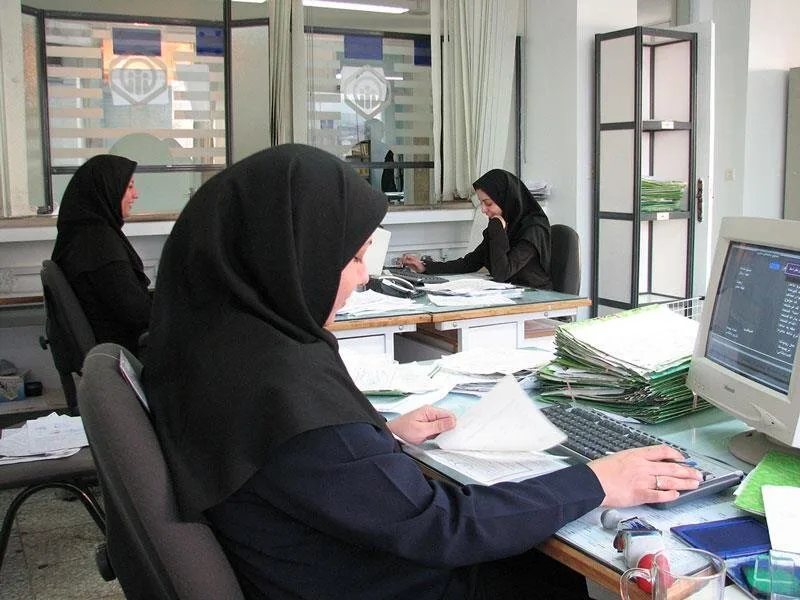
The government has developed a comprehensive program for remote work for its employees in order to improve the administrative structure and increase efficiency. According to this program, which has been presented by the Administrative and Recruitment Organization of the country, executive agencies will be allowed to take advantage of remote work for at least 2 days a week.
Determining Responsibilities and Expected Outcomes
This plan is considered a significant change in the way government employees operate. The implementation of remote work should not be limited to merely changing the workplace; rather, specific responsibilities and outcomes should be defined for each expert and manager. This measure is essential to ensure that each individual knows what tasks they are to perform within what timeframe and to whom they will be accountable for their performance.
Read more: Iraq Agreed to Establish 40 Flights Between Iran and Najaf
In this framework, there is also a special emphasis on establishing a clear relationship between employee performance and the level of rewards. This means that employee evaluations should be based on the actual results and outputs of their activities to provide the necessary motivation for greater efficiency.
Planning and New Software for Performance Evaluation
Additionally, it has been decided that the software related to this system should be prepared as soon as possible. After that, specific guidelines for performance evaluation and how to incentivize employees will be developed to implement the remote work capacity. According to the remote work regulations, the performance evaluation of remote employees and the payment of certain benefits, including overtime, will be based on the volume and quality of work done.
With this program, the government is striving to facilitate administrative processes while also focusing on improving work quality and increasing employee job satisfaction. These changes, especially in the post-COVID era, can serve as an opportunity for renewing the administrative structure and enhancing the quality of services to citizens.
Alongside this trend, Masoud Pezeshkian, the President, emphasized the need to pursue and pay the 4 billion euro debt of the food industries in his recent meeting with the Iranian Entrepreneurs Association. He stated in this session that the production wheels of large units are idle and small units are going bankrupt, and the food industry is merely seeking its rights.
Pezeshkian also pointed out that bureaucracy and the interference of supervisory bodies in the final stages of processes cause work stoppages, calling for facilitation in this regard. In his opinion, a large part of this amount can be resolved through agreements between debtors and creditors in the private sector, requiring only a signature.
Ultimately, these transformations in the administrative and economic system of the country can be seen as an effective step toward improving working and production conditions in Iran. However, achieving these goals requires the cooperation and synergy of all sectors and agencies.
Read more: Iran Prepared to Respond to U.S. Military Threats · Hossein Rahmanian Announced New Changes in the Remote Work Method for Government Employees