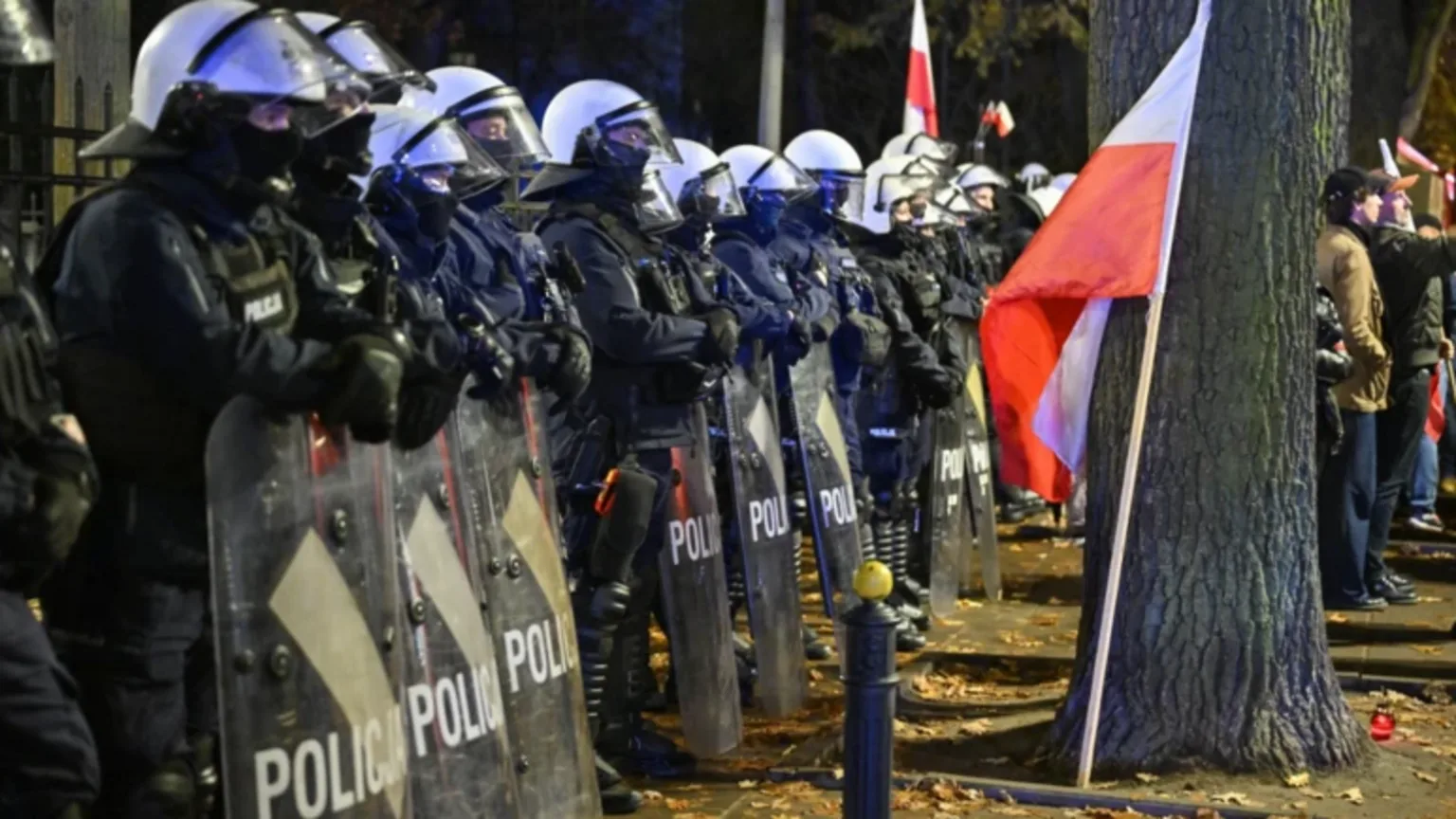
The political crisis in Poland has sharply escalated with the controversial change of the President of the Constitutional Court and the nighttime clashes in which Karol Nawrocki, the President of the country, has personally played a role. This crisis is now at the center of political consultations, and while tensions may rise again, an opportunity has arisen to examine the causes and consequences of these events.
Two Main Political Forces in Poland
Polish politics in the last two decades has largely revolved around two main political parties: the center-right "Civic Platform" led by Donald Tusk and the conservative "Law and Justice" led by Jarosław Kaczyński. In this parliamentary republic, the main levers of influence over the country's economic and social life are in the hands of the Prime Minister. However, after Karol Nawrocki's victory in last year's presidential election, he has shown a reluctance to accept a secondary role in the political system.
This situation has fueled verbal clashes between Nawrocki and the government led by Tusk. Nawrocki is making extensive use of the veto to block the government's plans, attempting to defeat "Civic Platform" and its allies in the upcoming parliamentary elections next fall.
Roots of the Constitutional Court Crisis
The roots of the Constitutional Court crisis date back more than a decade. This crisis began with the announcement by Anna Korwin-Piotrowska, a judge of the Constitutional Court, regarding the dismissal of the President of the Court and his deputy. Some legal experts consider this action legal, while others deem it unjustified. Bogdan Święczkowski, the President of the Court, does not recognize Korwin-Piotrowska as a judge, as she apparently has not taken the legal oath.
These disputes are particularly understandable given the long-standing tensions in Poland's judicial system. Since 2015, when "Law and Justice" came to power, there have been numerous criticisms regarding the legitimacy of the Constitutional Court and its judges. These tensions intensified especially after "Civic Platform" decided not to publish the decisions of the Constitutional Court.
Analysts believe that one of the consequences of this crisis has been the mobilization of right-wing forces. These forces, which had previously lost their cohesion due to internal disputes, are now in the process of rebuilding themselves for the upcoming parliamentary elections.
Consequences of the Upcoming Elections
The parliamentary elections next fall are of great significance for Poland. If the right-wing forces manage to gain a majority in the parliament, all power will be in the hands of conservative and nationalist forces. This change could have profound implications for Poland's domestic and foreign policies, as well as its relationship with the European Union.
On the other hand, if the current government wins, this outcome could indicate that Nawrocki's victory in last year's presidential election was an anomaly and that Poland is resisting a "rightward shift" in global politics.
Read more: Fire at the Lukoil refinery in Russia and long lines of cars · The Head of the Sovereign Council of Sudan wrote to Trump about the ceasefire