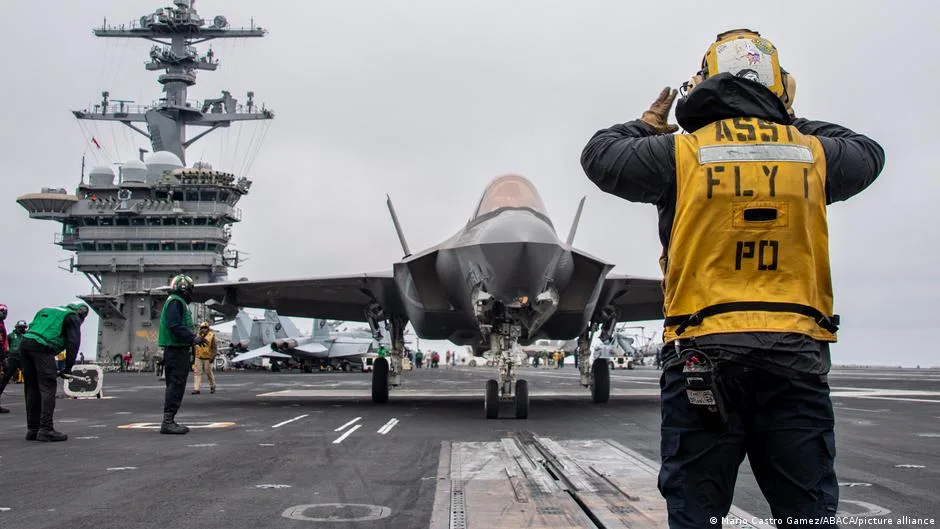
The Pentagon has ordered the United States Central Command (CENTCOM) to complete preparations for resuming large-scale military operations in Iran. This order was reported by U.S. officials on Thursday, October 8 (16 Mehr).
Details of the Pentagon's Order
No specific date has been set for the start of the attacks, and President Donald Trump has not yet made a final decision on this matter. However, sources in the United States and Israel have indicated that these attacks may occur before the U.S. midterm elections and also before the Israeli elections, which are held a week earlier.
Read more: Message from the Chief of Staff of the Yemeni Army to the Palestinian Resistance Brigades
Dimensions and Objectives of Possible Attacks
If large-scale military operations resume, they are expected to include extensive bombing of targets related to Iran's energy sector, infrastructure, and nuclear facilities. One Pentagon official has noted that the Defense Department's role is to develop and present military options to the President. Additionally, a White House official stated that the President of the United States has all options available at any time.
This official also referred to the situation in the Strait of Hormuz, saying: “The United States is in a very powerful position by controlling the Strait of Hormuz while Iran's economy is collapsing. Iran is severely damaged, and the situation will proceed in one of two ways: the easy way or the hard way.”
Analysis of Possible Consequences
Analysts believe that even supporters of these plans acknowledge that limited attacks alone cannot bring Iran to the negotiating table or resume safe passage through the Strait of Hormuz. However, proponents believe that further military action, after several months of fragile calm, could allow Trump to showcase his power and possibly declare some form of victory.
In this regard, a Republican aware of these discussions told analysts: “This will make it seem like the President has achieved a victory, and gasoline prices will start to decrease.” He also noted that after a limited operation, broader military actions may occur following the midterm elections.
Military and Economic Implications
Although any military attack campaign puts about 50,000 U.S. forces stationed in the region and their allies in the Gulf at risk of retaliatory attacks from the Islamic Republic, some of Trump's staunchest supporters are calling for the U.S. to withdraw from the war to stop the rising inflation. According to data from the U.S. Energy Information Administration, crude oil prices have typically risen when the U.S. has resumed its attacks after a pause.
Currently, the U.S. government is pursuing two paths simultaneously: continuing military and economic pressure and indirect negotiations. These negotiations are particularly complicated due to significant disagreements over the conditions and sequence of implementing a ceasefire and ending the blockade of the Strait of Hormuz.
Iran's Expectations and Political Situation
The Iranian government is likely anticipating the resumption of U.S. attacks. U.S. government officials believe that the Islamic Republic is currently in its weakest position since the beginning of the conflict. The country's economy is on the brink of collapse, and its leadership is also in turmoil. According to an informed official, “The Iranian government is keeping an eye on the calendar and knows that elections are approaching. They also want to strike at the President.”
This situation reflects increasing tensions that could influence the political behavior of both countries. Ultimately, an attack before the midterm elections could be perceived as a not-so-gentle pressure in this regard, but it may also have the opposite effect and make war and its consequences the main focus of attention.
Read more: Wens announces U.S. condition for nuclear agreement with Iran · Attack on an oil tanker off the coast of Qatar following Iran's threat to close the Strait of Hormuz