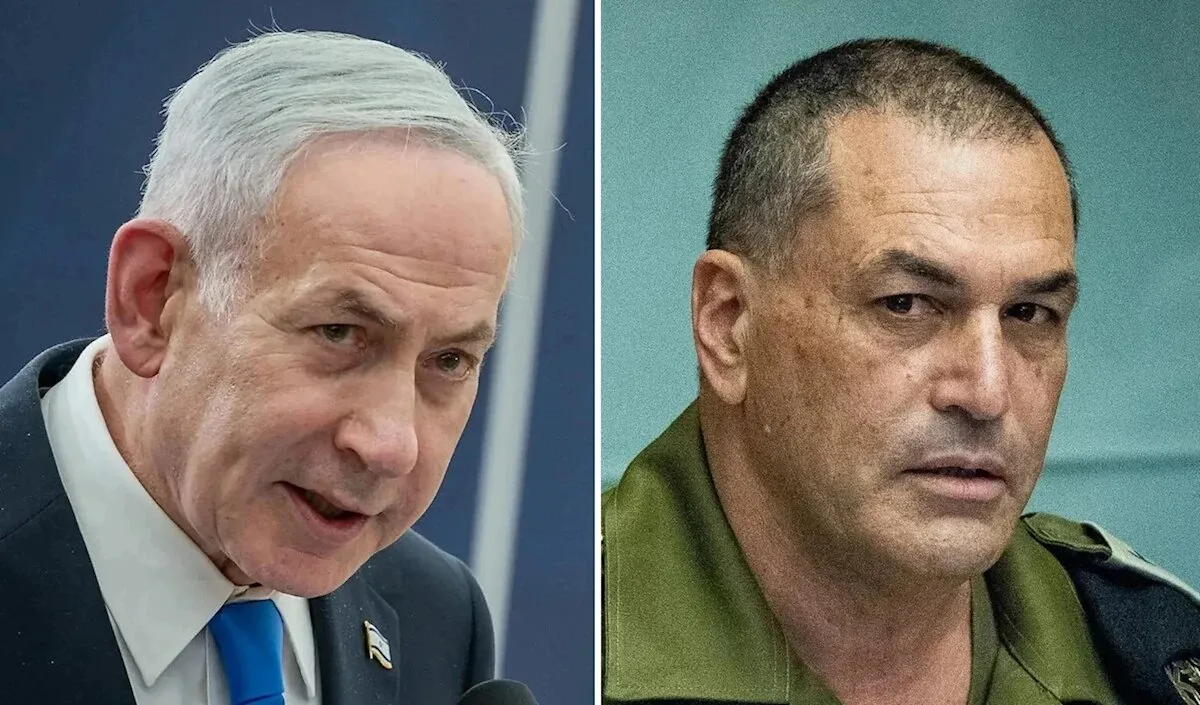
Benjamin Netanyahu, the Prime Minister of the Zionist regime, has explicitly stated that he can no longer tolerate Eyal Zamir, the Chief of Staff of the Army, following escalating tensions between them. These tensions reached a peak as the disagreements between Netanyahu and Zamir have reached sensitive points, raising concerns about Zamir's future in his position.
History of Tensions
The disagreement between Netanyahu and Zamir has intensified, especially after Zamir's criticisms of the Zionist regime's military policies in Gaza and other Palestinian areas. Zamir, recognized as an experienced military figure, has repeatedly warned about the consequences of recent political decisions, leading to further tensions between him and Netanyahu.
Read more: Unusual Fire Recorded at Ras Tanura Refinery in Saudi Arabia
Future Predictions
According to existing estimates, if Netanyahu succeeds in forming the next government after the elections, the chances of Zamir remaining in his position will be very low. This could have profound effects on the military structure of the Zionist regime and even on the country's security policies.
As Netanyahu is under significant political pressure, his decisions regarding Zamir could be seen as a key pivot in the upcoming elections. Many experts believe that Netanyahu's lack of trust in Zamir could lead to major changes in the military leadership of this regime.
Meanwhile, Zamir faces serious challenges. As the Chief of Staff of the Army, he is in a position where he must be accountable for political and military decisions, while Netanyahu seeks to maintain his power and create a strong image of leadership. This situation could lead to divisions within the army as well as among military and political officials.
Netanyahu, known as one of the discussed figures in Middle Eastern politics, is seeking to maintain control over the army and prevent any criticism from military officials by making decisions that seem based on his personal and political interests. This could lead to a deeper crisis in the relationship between politics and militarism in the Zionist regime.
Read more: China Sends Envoy to Reduce Tensions in the Middle East · Ben Gvir Calls for the Dissolution of the Palestinian Authority