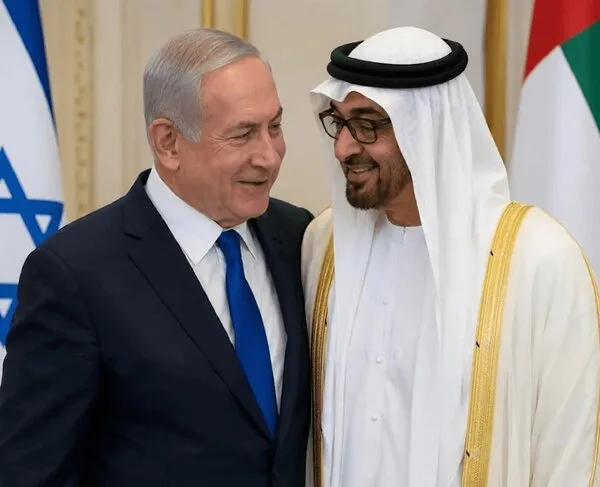
Benjamin Netanyahu, the Prime Minister of the Israeli regime, made an unexpected and secret trip to the United Arab Emirates and met with Mohammed bin Zayed, the President of the country. This trip took place amid turbulent political and security realities in the West Asia region, as Netanyahu seeks to strengthen his international relations.
Why is Netanyahu's trip to the UAE important?
Netanyahu's meeting with Mohammed bin Zayed, one of the most important Arab leaders in the region, holds significant political and strategic importance. Since the Abraham Accords, which led to the normalization of relations between this country and the Israeli regime, the UAE has been recognized as a key partner for Israel in the Middle East. In this context, Netanyahu is trying to benefit from the political and economic support of the UAE by strengthening his relations with the country.
Read more: New tensions in Iraq after the suspension of flights from Iran
Internal conditions in Israel and their impact on Netanyahu's trip
Netanyahu's internal conditions have also played a role in this trip. Given the political and social crises facing the Israeli regime, Netanyahu is seeking to create stability and strengthen his position within the country. The trip to the UAE and interaction with Arab leaders can be seen as a positive move to improve his image among Israeli citizens.
However, some analysts believe that this trip is solely due to Netanyahu's internal circumstances and may not have significant implications for the security and political situation in the region, as many of the existing challenges in Israel's relations with Arab countries and internal tensions remain unresolved.
Consequences of this trip on Israel-UAE relations
Netanyahu's trip to the UAE could have important consequences for the relations between the two countries. On one hand, this meeting may lead to strengthened economic and military cooperation, while on the other hand, it could raise concerns among other Arab countries. In particular, neighboring countries like Saudi Arabia and Qatar are likely to closely monitor the developments of this trip and express their reactions to this action by Israel.
Ultimately, given the secrecy of this trip and its unclear details, a precise assessment of Netanyahu's objectives and its implications requires time and deeper analyses. However, what is certain is that this trip is situated within broader developments in the region and its impacts on the future of relations between Israel and Arab countries.
Read more: The European Union seeks a joint response against Russia · Meeting between Heiko Maas and Sergey Lavrov on the sidelines of the UN General Assembly