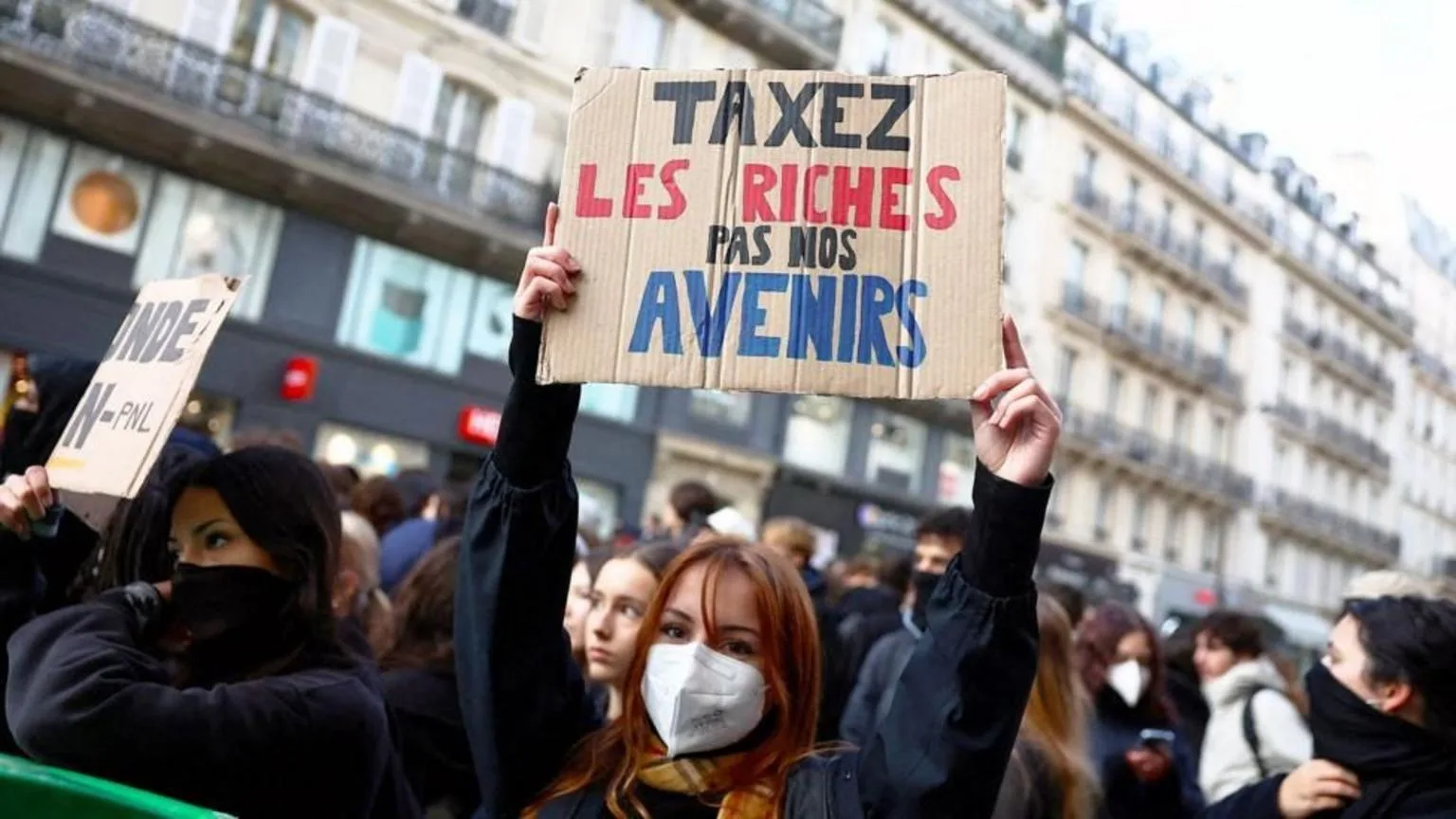
Nationwide protests in France continue with increased intensity. The riot police in France have fired tear gas at protesters in several cities on the latest day of demonstrations against the rising cost of living and public services. These protests, which began in September with student strikes, have reached their peak due to rising prices and public dissatisfaction.
Fires and Clashes in the Streets
During today's protests, a school near the southern city of Toulouse was set on fire. In central Paris, large groups of people who did not participate in the main official march attempted to build barricades with trash cans and clashed with the police. Additionally, the Eiffel Tower has been closed to visitors.
Read more: Giuseppe Conte: I recognize Palestine and will tear up the military agreement with Israel
Unions, which have declared a general strike to demand wage increases, expect eight hundred thousand people to protest in the streets across the country. Laurent Nuñez, the French Minister of the Interior, has announced that 70,000 police and gendarmerie personnel are on standby and that a "very decisive" response will be shown against any potential outbreak of violence.
Disruption of Public Services and Call for Strikes
More than 250 separate protest actions have been planned, and reports indicate disruptions in schools, hospitals, and the public transportation system. Workers have been asked to halt production at oil refineries, and due to disruptions in nuclear power plants, France is expected to import more electricity than its domestic production.
A coalition of labor unions has called on workers, retirees, and youth to join the strikes on Thursday to increase pressure on the government. They are particularly demanding an increase in the minimum wage, which is currently €12.31 per hour.
The government has attempted to quell public anger over rising prices by releasing 10 million barrels of diesel from strategic reserves and reducing fuel prices, but protests continue. Union leaders have criticized that recent marches have been kept away from central Paris due to the violence that occurred on October 17 in various cities and regions.
The French Minister of the Interior has pointed to three potential dangers for today's protests: extremist leftist groups known as "black blocs," looting, and also spontaneous marches without union authorization. In this situation, the government is facing a serious challenge, with only six months remaining until the French presidential elections.
Read more: Tucker Carlson: The Trump era is over · Cost of living in France for Iranians: housing, food, and other expenses