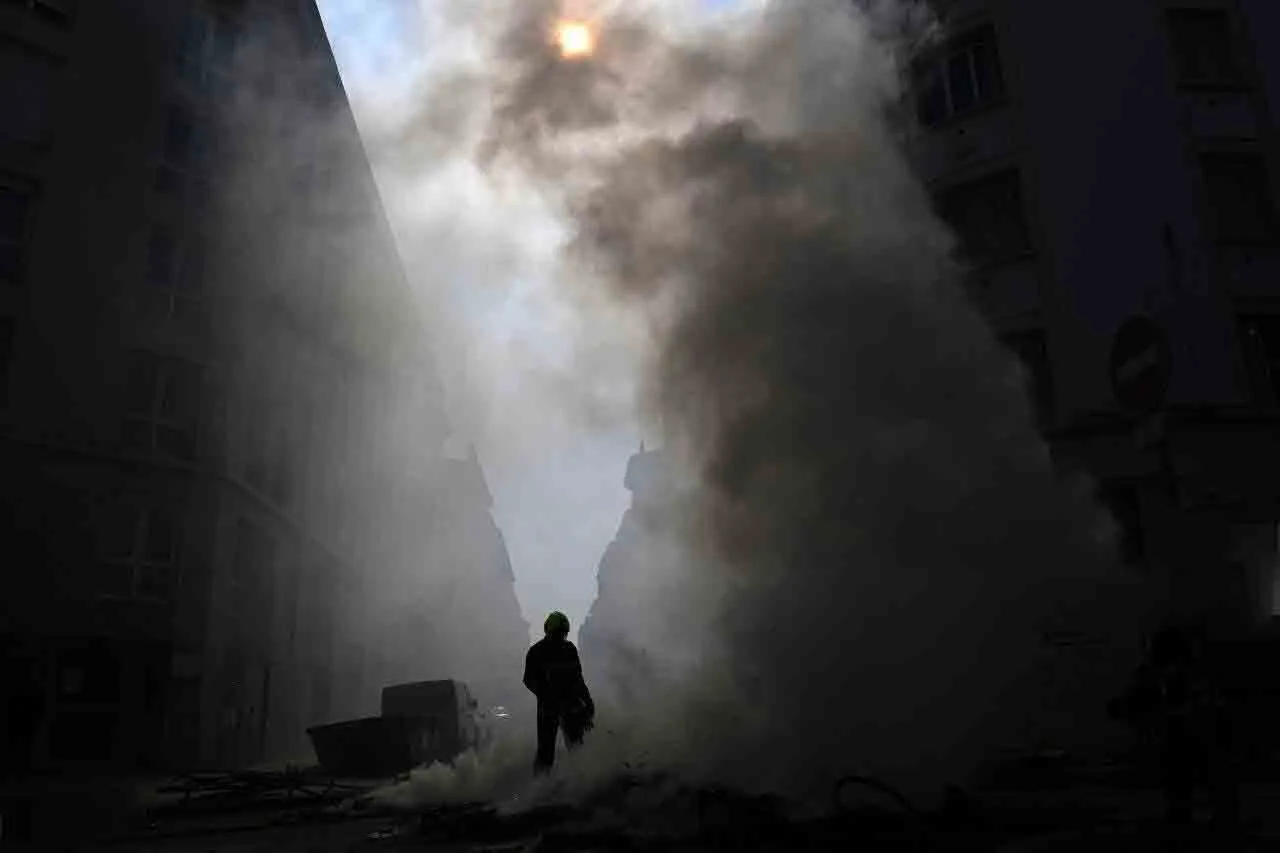
France is once again facing a wave of nationwide protests. These protests, which began in schools, have quickly turned into a political and social crisis in the country, putting Emmanuel Macron's government under pressure during one of its most sensitive political moments.
Causes and Dimensions of the Protests
Teacher shortages, dilapidated school buildings, overcrowded classrooms, and inequality in access to education have brought French students to the streets. However, the police's response to the protesters and the escalation of violence at the margins of the gatherings have extended the scope of the crisis beyond the initial demands. These protests began in the suburbs of Paris and have spread to other cities.
Read more: Yemen's Foreign Ministry: Creating a Deterrent Equation to End Riyadh's Occupation is Essential
According to published reports, the French Ministry of the Interior announced that the number of participants in last Thursday's protests was 71,500, with 24,500 of them taking to the streets in Paris. The police also arrested more than 500 people during these protests, and in the following days, the number of arrests rose to over 6,600, indicating the intensity of street confrontations.
Severe Consequences and Social Concerns
These protests are not only related to the shortage of teachers and the dilapidation of buildings, but the main issue is that the French education system no longer provides equal opportunities for all citizens. In the 2024-2025 school year, nearly 10% of teaching hours in public high schools in France remain without a teacher, and between 10% to 20% of school buildings are in a severely dilapidated condition.
Despite the government's promise to send an additional 3,000 teachers and offer new proposals, the protests continue. Protesters are demanding tangible and immediate actions, and distrust in the government's ability to fulfill its promises is one of the main reasons for the continuation of these protests.
Polls show that 72% of French people consider the students' demands legitimate. On the eve of the 2027 presidential elections, this crisis has become a topic for party competition. "Jean-Luc Mélenchon," a leftist figure in France, has supported the students and criticized the police's actions.
Overall, the continuation of unrest in France is the result of the accumulation of several crises over the past years: cuts to public budgets, social inequality, declining quality of public services, and reduced trust in politicians. This situation indicates that any new crisis could turn into a widespread wave of protests, and these protests have not yet subsided.
Read more: Maria Zakharova: Russia Asks Japan to Come to Its Senses · Brigadier General Seyed Abolfazl Mousavipour Announced New Police Programs for Student Safety