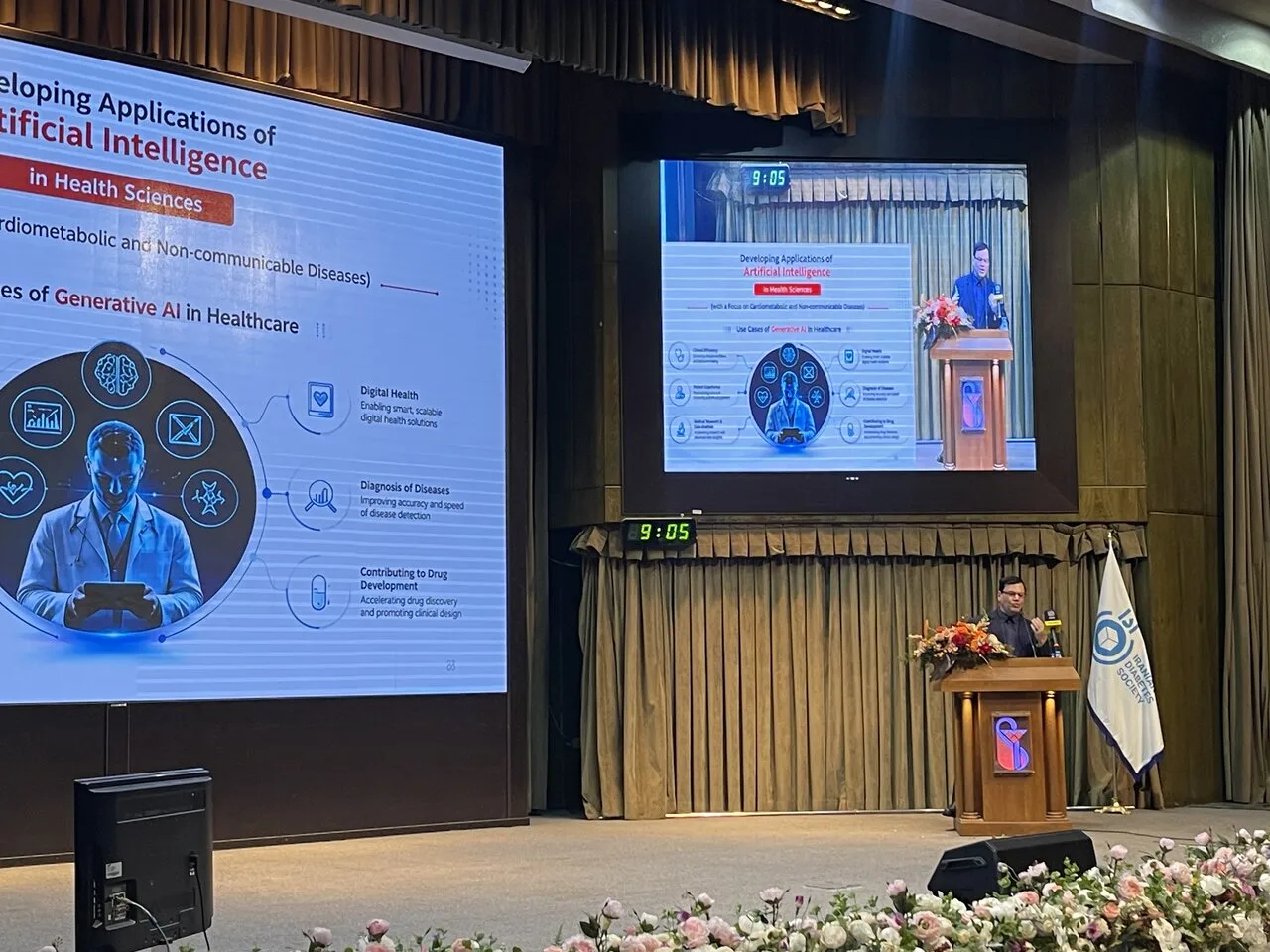
Mohammad Baqer Larijani, head of the Endocrinology and Metabolism Research Institute at Tehran University of Medical Sciences, expressed concern about the increasing prevalence of this disease in Iran and the world at the eighth International Diabetes Management Congress, emphasizing the need for a change in treatment approaches. He noted that despite international efforts, countries have not been successful in controlling the rise of obesity and diabetes, and predictions indicate that this trend will continue in the coming years.
Increase in Diabetes and Obesity Prevalence in Iran
Larijani referred to studies conducted on nearly 30,000 people in Iran, stating, "Studies show that the prevalence of diabetes in the country has increased from 10 percent to 14 percent. Currently, only 30 percent of diabetic patients in the country have optimal disease control." He also mentioned that about 80 percent of the country's population suffers from metabolic disorders, and 30 to 40 percent are facing hyperlipidemia.
Read more: Zahra Oladi: Even if Juice is Natural, it is Harmful to Health
5-Year Plan for Diabetes Control
Larijani, referring to the resolutions of the Supreme Health Council and the presence of the President, deemed it essential to aim for stabilizing the prevalence of diabetes and obesity at current levels. He added, "Our goal is to increase the diabetes diagnosis rate to 80 percent and disease control to 80 percent. Additionally, the use of statins in eligible patients should be increased, and patients' access to medications should be improved."
The head of the Endocrinology and Metabolism Research Institute emphasized the necessity of changing treatment approaches, stating, "The management of diabetic patients must undergo serious changes with the help of artificial intelligence. This technology can assist us in more accurate diagnosis, appropriate treatment selection, and reducing medical errors."
Diabetes AI Assistant
Larijani announced the initiation of designing an AI diabetes assistant for doctors. This system allows patients to communicate with the system 24/7 and record their status, symptoms, and problems. He explained, "When a patient visits, the doctor can receive a summary of the recorded information and, if necessary, ask additional questions."
This system aids doctors in decision-making and selecting treatments suitable for each patient's conditions using clinical guidelines. Larijani emphasized that this application could help personalize treatment and improve patients' quality of life.
Importance of Identifying High-Risk Patients
Larijani also pointed out the importance of identifying individuals at risk for diabetes and prediabetes, stating, "We must identify high-risk patients and provide them with appropriate treatment. Additionally, continuous monitoring of their health status is essential."
He emphasized the need to develop a disease registration system, referring to international plans for controlling non-communicable diseases, and stated, "We need to identify which areas we are facing problems in and take action to rectify them. Currently, we do not have accurate registration of diabetic patients in the country, and this issue is one of the barriers to proper disease management."
Read more: Medical Oath Ceremony for Non-Iranian Graduates at Imam Reza Shrine · Dr. Ehsan Mostafavi Announced the Start of Reconstruction of Pasteur Institute