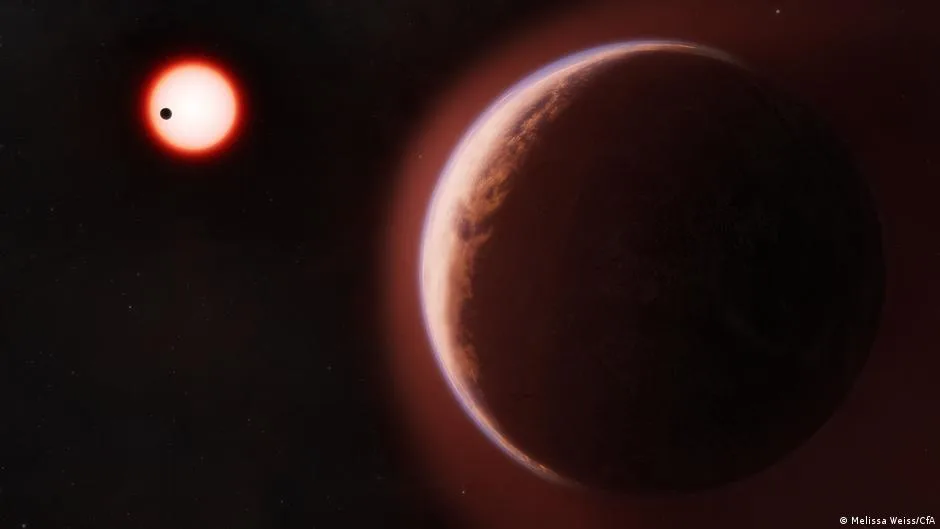
The new James Webb software, called "Physics-Based Learning for Imaging Planets" (FLIP), assists researchers in identifying dim exoplanets. Observing these planets is one of the major challenges for space telescopes, as their light is obscured by the brightness of stars.
Using Innovative Techniques to Remove Star Light
Researchers in a new study published in Nature have developed software that can block the dazzling light of stars. This software utilizes a tool embedded in the James Webb telescope to create an artificial eclipse, where a significant portion of the star's light is blocked.
Read more: FBI Links $6 Billion Binance Theft to North Korea
However, some star light still passes through. To overcome this challenge, astronomers use images of multiple reference stars and subtract their dazzling light from the image of the target planet. This method allows researchers to reveal a new view of giant planets that have been hidden in the James Webb data.
Challenges in Identifying Earth-like Planets
Astronomers, with the help of the James Webb telescope, are able to identify planets that are nearly the size of Saturn, orbiting their star at a distance similar to that of Pluto from the Sun. However, to directly image planets with Earth-like conditions, a telescope is needed that is 100 to 1000 times more stable than James Webb.
The FLIP software, by simulating how the telescope and its mirrors work, can assist in removing the dazzling light of stars and identifying smaller planets. The ultimate goal of this software is to facilitate the construction of NASA's "Habitable Worlds Observatory" (HWO), which is set to be launched into space in the 2040s.
Astronomers estimate that the optical system of HWO must maintain its stability with an accuracy of one trillionth of a meter to be able to image Earth-like planets.
Currently, astronomers have successfully identified and confirmed about 6,500 exoplanets, which are located in over 4,800 planetary systems. Thousands of other signals and candidate planets are also awaiting final confirmation.
Read more: Billion-Dollar Revenue from Horror Games in 2026 · Discovery of Radio Waves from Planet β Pictoris b 63 Light Years Away