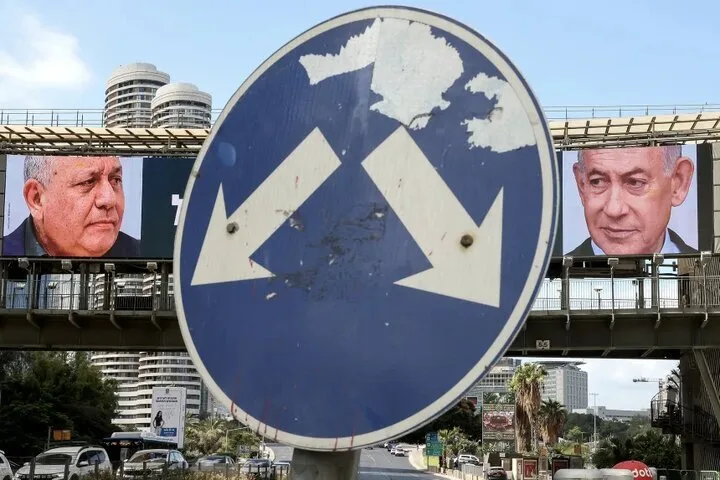
Benjamin Netanyahu, the former Prime Minister of Israel and leader of the Likud party, has been introduced as the largest party in the Knesset with 27 seats. While the Yesh Atid party led by Gadi Eisenkot comes in second with 21 seats, neither of the two camps currently holds the necessary majority to form a government.
Polls and the New Structure of the Knesset
According to the latest estimates from Israel's Channel 12, the "Together" coalition and the Joint Arab List will each secure 12 seats, while the Democratic Party will gain 9 seats. Additionally, the parties Israel Beiteinu, Shas, and Ra'am will each acquire 7 seats. The parties of Jewish Power, Torah Judaism, and Religious Zionism are also projected to receive 6 seats respectively.
Read more: Israel Elections; The Battle for Benjamin Netanyahu's Political Survival
Another significant development observed in this poll is the increase in the total number of seats held by Arab parties to 19. This change could have a decisive impact on negotiations for the formation of the next government. Despite the lead of Netanyahu's coalition, this camp still remains 9 seats short of the 61-seat majority required to form a government.
Challenges Ahead in Forming a Government
The opposition coalition, with 49 seats, will also be unable to form a government unless it garners support from other parties. These results indicate that despite the shift in balance favoring Netanyahu, the possibility of a political deadlock in forming the next Israeli government remains intact. The statistics pertain to the updated estimates from the exit poll of Channel 12 Israel and do not constitute the final result of the vote count.
Meanwhile, the Ma'ariv newspaper has also speculated, stating that Gadi Eisenkot will be the first person tasked with forming a cabinet by the President. This indicates potential changes in the political structure of Israel and the challenges facing the next government.
Read more: Masoud Pezeshkian and the Emir of Qatar Emphasized the Development of Relations in Moscow · Netanyahu Announced a Major Surprise for the Palestinian Authority