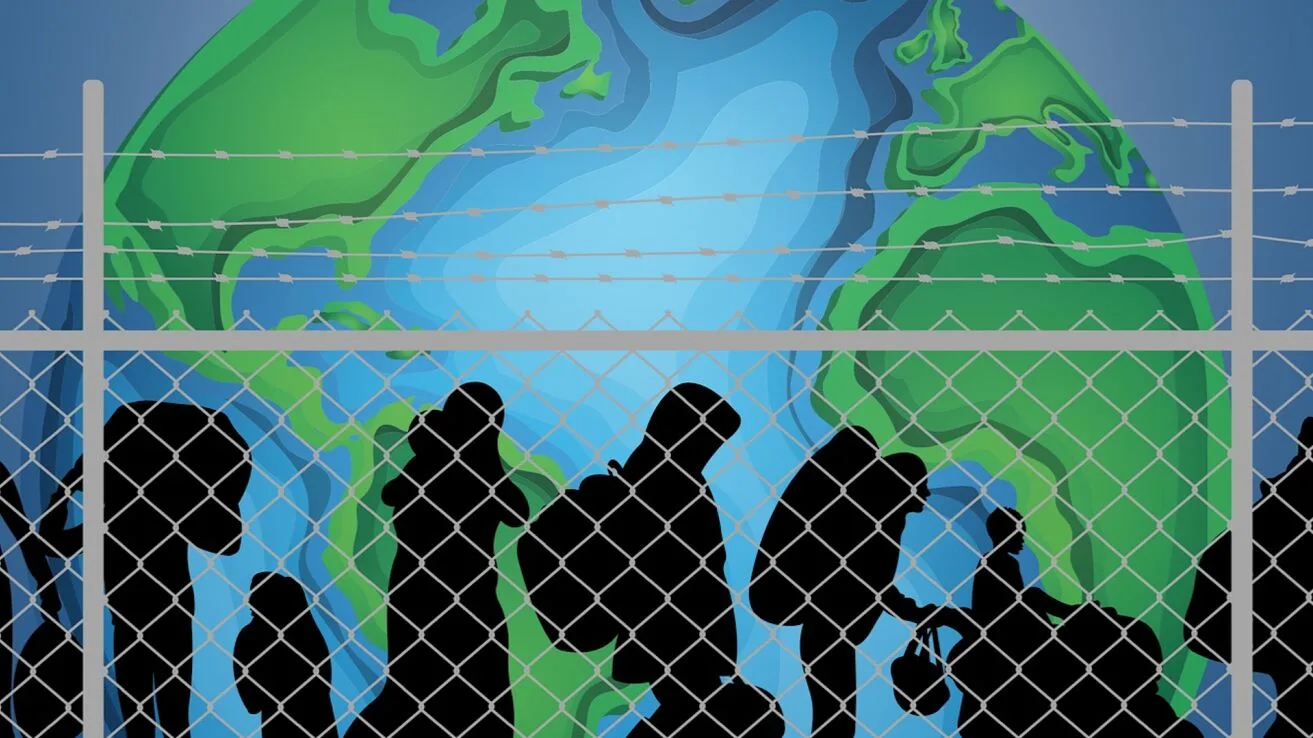
Digital exiles; this term has recently been heard in discussions and reports about the new wave of Iranian migration to Turkey and Armenia. War and internet outages have completely changed the meaning of migration for some Iranians. For those who previously viewed migration as a path to achieving higher income, better education, or a better life, leaving the country has now become a way to maintain jobs, continue education, and connect with the world.
Temporary Destinations and Internet Access
Reports of Iranians traveling to Turkey and Armenia indicate the formation of a new pattern of mobility. In this pattern, the destination is not necessarily a permanent home and is sometimes just a place where one can access high-quality internet. Hamidreza Ahmadi, a member of the Electronic Commerce Association of the Chamber of Commerce, criticized the continuation of filtering and warned that policies aimed at ensuring security have themselves become a source of security threats and widespread economic damage.
Read more: Iranians ranked among the top 10 countries with high IQ
These days, migration is usually tied to a set of long-term hopes and expectations; achieving better job opportunities, continuing education, and greater security and welfare. However, war and internet restrictions have raised a different issue for a group of Iranians. A report from CivilNet Armenia introduces a wave of "digital exiles" from Iran; a group of IT professionals, freelancers, students, and small businesses who have left Iran to restore the ability to work and study.
Stories from Armenia
This report tells the story of a 22-year-old Iranian graduate who has gone to Armenia. Due to internet outages, his communication with his wife in Austria has been disrupted, and he has missed university application deadlines. After arriving in Yerevan, he has been trying to obtain residency in Armenia to continue the visa application process for Austria.
In another example, an Iranian product manager working for a German technology company has moved to Yerevan due to communication disruptions. According to this report, his company transferred its Tehran office to Armenia, and 10 employees along with their families have settled in Yerevan. The main reason for this decision was the company's inability to maintain stable communication with foreign clients and investors.
The destination of Armenia for Iranians, especially compared to the wave of Russian migration to this country after the Ukraine war, is smaller and more scattered. This wave consists mainly of technology specialists, freelancers, and small startups. Data from the United Nations High Commissioner for Refugees indicates that since the onset of the conflicts on February 28, approximately 633,500 entries of Iranians into neighboring countries have been recorded or estimated.
This number represents the number of individuals who have not definitively left Iran forever and includes two-way movements. However, statistics from Turkey and Armenia show the positions these two countries hold in the mobility of Iranians.
From March 3 to June 18, 2026, more than 462,000 entries of Iranians into Turkey have been recorded. During the same period, nearly 400,000 returns of Iranian nationals from Turkey to Iran have also been reported. This extensive movement indicates the fluidity of mobility.
Reports also indicate a similar situation at the Armenian border. UNHCR has estimated that from February 28 to September 28, approximately 143,600 crossings of Iranians into Armenia and 134,800 crossings from Armenia to Iran have occurred. Turkey has also become one of the temporary access routes to the internet.
This situation indicates that in analyzing migration during wartime, one must distinguish between permanent exits, temporary stays, border crossings, and transit passages. Nevertheless, even if the trips are temporary, the repetition of long journeys to make a call or work online for a few hours is a sign of disruption in access to the normal infrastructure of life.
Read more: Afshin Peyrovani spotted at a concert of an Iranian singer in America · Major General Mohsen Rezai: Drone and missile production has not been halted