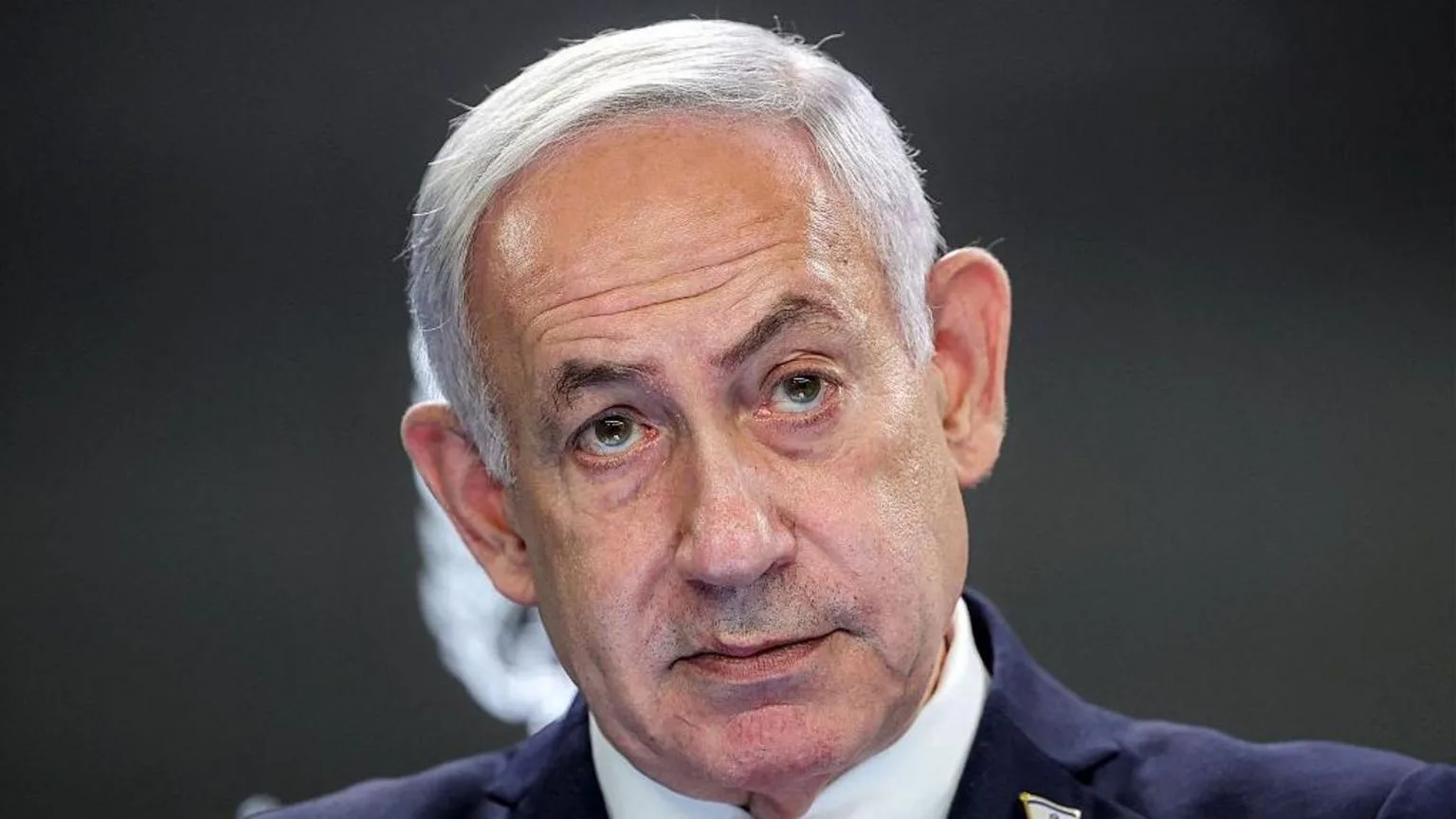
Benjamin Netanyahu, the Prime Minister of Israel, is facing significant challenges in the political arena just weeks before the elections. Polls indicate that his camp has not yet achieved the necessary majority to remain in power, despite having been at the helm for several decades and having a tumultuous history.
Netanyahu's Controversial Remarks on Iran
In this context, Netanyahu recently referred to the overthrow of the Iranian government as Israel's "central mission" during a gathering of military commanders, emphasizing the continuation of confrontation with the country. These remarks come as his camp secured only 50 seats in parliament in a September 14 poll, needing a majority of 61 seats to form a government.
Read more: $43.6 billion damage of the Iran war to U.S. military equipment
As the October 27 elections approach, Netanyahu has the opportunity to change the competitive landscape. However, the question arises whether escalating tensions with Iran could be one of his options and what impact it will have on voter reactions.
Concerns of Opponents and Analysts
Among Netanyahu's opponents, there is concern about the use of military tensions as an electoral tool. Dalia Shindlin, a political science researcher, believes that supporters of opposition parties are deeply worried that Netanyahu may escalate tensions to influence the elections. However, some experts believe that Netanyahu may be cautious in using the option of war.
Erwin van Veen, the director of the Middle East program at the Clingendael Institute in the Netherlands, also emphasizes that security threats from Iran have significantly decreased, and as a result, the likelihood of renewed attacks on Iran before the elections will likely be influenced by electoral calculations. In his view, by presenting the overthrow of the Iranian government as a war objective, Netanyahu may seek support for continued pressure on the country.
Meanwhile, topics such as security cooperation with the United States and Arab countries are also under discussion. A meeting involving military commanders from the United States, Israel, and several Arab countries has been held in Germany to strengthen security cooperation.
While the media reports on a $2.8 billion arms sale to Israel, analysts are still assessing the implications of these developments. David Waxman, a political science professor, points out that the likelihood of escalating tensions with Iran ahead of the elections seems unlikely, as this action could affect Netanyahu's standing in the eyes of voters.
Netanyahu is striving to change his political fate in a critical and decisive election by addressing the challenges ahead, but this path will not be easy for him.
Read more: Michelle Bachelet withdraws from the competition to succeed Guterres at the United Nations · Seyed Abbas Araghchi: Enough crocodile tears, Mr. Barout