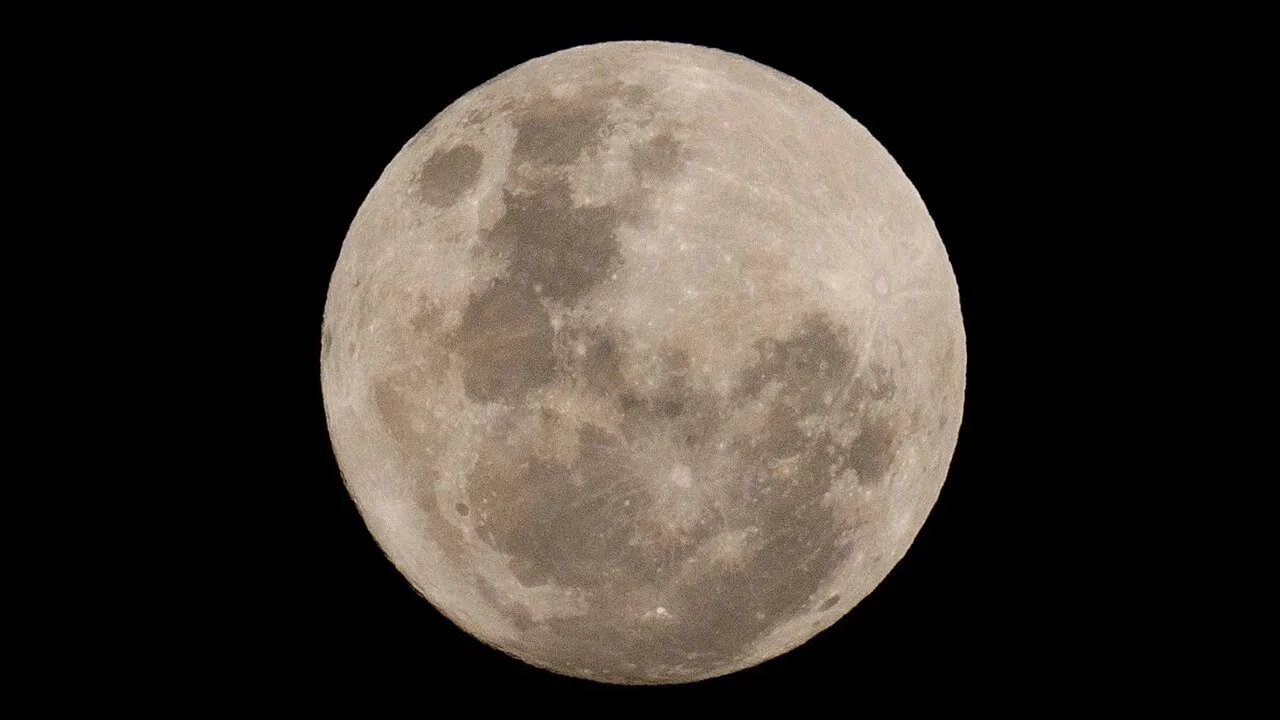
The McGathin crater, which has a diameter of 222 meters and a depth of 43 meters located on the eastern edge of the Moon, has recently formed due to the impact of an asteroid or comet the size of a three to six-story building. This impact occurred between April 11 and May 22, 2024, significantly altering the appearance of the Moon's surface.
Details of the Impact and Its Effects
According to NASA estimates, the likelihood of an impact of this magnitude occurring is only once every century or even less. This incident has not only created a new crater on the Moon's surface but has also had significant effects on the surrounding area. NASA's thermal instruments show that this area, about 6.4 kilometers around the McGathin crater, is nearly 9 degrees Celsius colder at night than its surrounding environment.
Read more: Azam Karami Shines with Smart Monitoring Plan for Railway Line Errors at BRICS
Scientific and Technological Implications
Researchers believe that the aforementioned impact has caused the soft lunar soil to shift and become more porous, reducing its ability to retain heat. This finding could be particularly important in the design of future rovers for Mars and the Moon and in understanding the behavior of lunar soil. As research on the Moon's surface and other celestial bodies continues, this type of information can help improve our understanding of how planets and celestial bodies interact with each other.
As a result, this impact has not only created a physical change on the Moon's surface but could also serve as a milestone in future space studies. With advancements in technology and new tools, the possibility of more precise and in-depth examination of such phenomena is provided, which can help us better understand the universe.
Read more: FBI Investigates Cyber Attacks on Two Oil Tankers Heading to America · New Outlook for SpaceX: Increasing Shares and Strengthening Defense in Britain