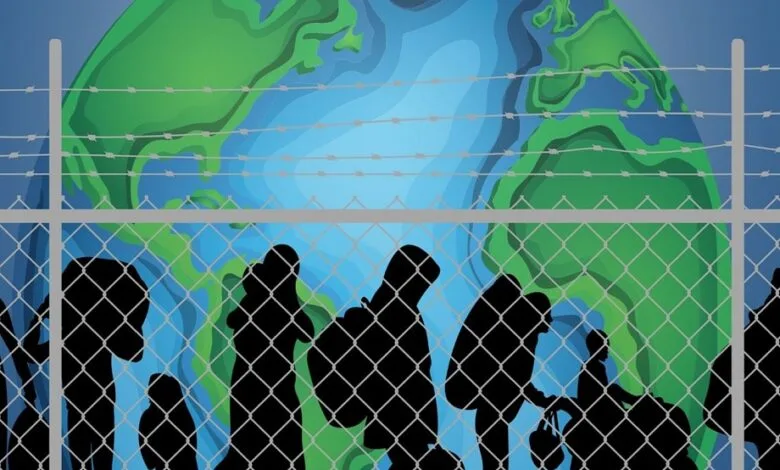
Access to the internet, especially under the current conditions in Iran, has become one of the vital factors for living and working. War and internet outages have changed the concept of migration for a large number of Iranians, and some are seeking ways to maintain their jobs, continue their education, and communicate with the world. In this context, Turkey and Armenia have become important destinations for these new relocations.
Digital Exiles in Armenia
Reports indicate the emergence of a wave of "digital exiles" from Iran in Armenia; a group consisting of IT workers, freelancers, students, and small businesses who have left Iran to maintain their communications. The story of a 22-year-old Iranian who has gone to Armenia symbolizes this situation. He points out that the internet disruptions in Iran have not only disrupted his communication with his wife in Austria but have also caused him to miss academic deadlines.
Read more: The presence of 50,000 Iraqi students in Iran and the removal of travel barriers
In another example, an Iranian product manager working for a German technology company has moved to Yerevan due to communication disruptions. He states that his company relocated its Tehran office to Armenia due to the inability to communicate with foreign clients and investors, sending several employees along with their families there. These relocations are somewhat compared to the wave of Russians migrating to Armenia after the Ukraine war, but in the case of Iranians, this wave is smaller and more scattered.
Border Crossing Statistics and Relocations
Data from the United Nations High Commissioner for Refugees (UNHCR) shows that by September 28, 2026, about 633,500 entries of Iranians into neighboring countries have been recorded. This statistic does not include individuals who have permanently left Iran; rather, some of them have come to these countries for family visits, business trips, or temporary stays. In this context, from March 3 to June 18, 2026, over 462,000 entries of Iranians into Turkey were recorded, and nearly 400,000 returns to Iran were also reported.
During this period, Turkey has been recognized not only as a tourist destination but also as a temporary access route to the internet. One woman from Tehran, who travels to Turkey to make a video call with her son, exemplifies the reality that for some individuals, access to the internet has become a basic need. This situation indicates that relocations during this period may be temporary, but the repetition of trips and the problems arising from them are a sign of disruption in access to the normal infrastructure of life.
It seems that the motivations for migration have faced serious changes; from a long-term goal to an urgent and operational necessity. While migration is usually undertaken to achieve better opportunities, now some individuals are merely seeking an environment where they can carry out their work and access academic resources. This phenomenon is described as "emergency relocations driven by digital needs" and reflects a change in the patterns of migration in today's world.
Read more: The share of 12,700 Iranian students from American universities · Hooman Mahmoudi and the story of migration in the short film 'Where is the Door'